
Struck-By Prevention: Everything You Need to Know
A Practical Guide to Protecting Workers Around Heavy Equipment
Struck-by incidents are one of the leading causes of serious injury and death for workers on foot near mobile equipment. They happen fast, often in a blind spot, and usually in the seconds when an operator cannot see a worker who is right there. Preventing them starts with understanding how they occur, why traditional safeguards fall short, and which controls actually reduce risk on your site.
This resource hub brings that knowledge together in one place. SCAN~LINK has spent years helping safety leaders across construction, mining, oil and gas, forestry, waste, and the heavy industry to reduce struck-by risk through passive RFID people-detection technology. Below, you will find the essentials of struck-by prevention, plus a library of in-depth guides that take each topic further.
Why Struck-By Prevention Deserves Your Attention
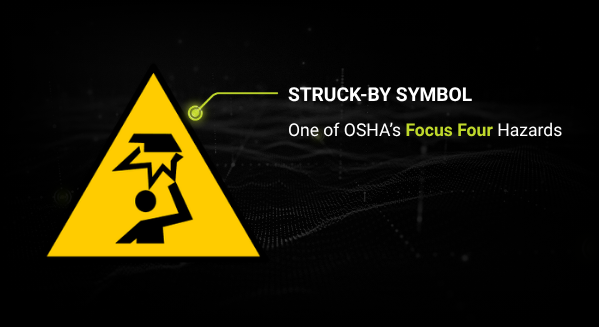
Struck-by hazards are not rare edge cases. They are a persistent, well-documented threat across every industry that puts people and machines in the same space.
Struck-by is one of OSHA's "Focus Four" construction hazards, the group of hazards responsible for the majority of construction fatalities, according to OSHA.
75%
Approximately 75% of struck-by fatalities involve heavy equipment such as trucks or cranes, and one in four "struck by vehicle" deaths involves a construction worker, more than any other occupation, per OSHA
13%
In Canada, struck-by and caught-in incidents accounted for 13% of all workplace fatalities in Ontario over a recent ten-year period, making it the third-highest cause of work-related deaths, according to the IHSA
While the statistics show the scale of the problem, the underlying risk is straightforward: whenever workers on foot and mobile equipment share the same space, the potential for a struck-by incident exists. That exposure takes different forms across the industries where people and machinery routinely work side by side:
- Construction: Reversing trucks & loaders, swinging excavator arms, and congested sites create constant equipment-worker interaction.
- Mining & Aggregate: Large haul trucks, dozers, and loaders operate in tight quarters with significant blind zones.
- Oil & Gas: Service rigs, transport vehicles, and heavy equipment move across busy sites.
- Forestry & Lumber: Log loaders, skidders, and yard equipment move continuously through active zones.
- Waste & Recycling: Collection vehicles and loaders put workers close to moving machinery and conveyors.
- Industrial & Manufacturing: Forklifts and material handling equipment operate near workers throughout the facility.
The equipment and working conditions vary from one industry to the next, but the underlying challenge remains the same: keeping people and moving machinery safely separated when they have to share the same work environment.
Why Traditional Safeguards Fall Short
Most sites already rely on familiar tools to manage struck-by risk. Mirrors, backup beepers, spotters, and cameras all serve a purpose, and every one of them adds a layer of awareness. The challenge is that each depends on a person seeing, hearing, and reacting in time.
That dependence is where prevention breaks down.
They Rely On Constant Human Vigilance
An operator managing a machine, a load, and a schedule cannot watch every zone at every moment. A single lapse in a blind spot is all it takes.
They Struggle In Real Jobsite Conditions
Dust, noise, vibration, and low light are the norm on active sites, and they degrade visibility and audibility when protection matters most.
Alarm Fatigue Sets In
When beepers and alerts sound constantly, crews stop reacting to them. Warning that are always on quickly become background noise.
They Do Not Confirm a Person Is Present
Most conventional tools warn about proximity in general. They do not verify that a worker specifically has entered the danger zone, and they rarely create a record of the event.
This does not mean that traditional safeguards should be abandoned. It means they need reinforcement from detection that does not depend on perfect human attention. Passive RFID person-specific detection add to these safety layers by identifying tagged workers the moment they enter a hazard zone, alerting both the operator and the worker on foot, and logging every detection event automatically.
Explore the Struck-By Prevention Library
Each guide below takes one part of struck-by prevention deeper. Start with the fundamentals, then move through causes, prevention strategies, and the role of detection technology.
FAQs
Find answers to common questions about struck-by incidents, what causes them, and how detection technology helps improve worker safety around heavy equipment.
What is a struck-by incident?
A struck-by incident occurs when a worker is hit by a moving object, piece of equipment, or vehicle. According to OSHA, these injuries are produced by forcible contact or impact between a person and an object. Struck-by hazards are one of the leading causes of serious injury and death for workers on foot near mobile equipment.
What is the main cause for struck-by incidents around heavy equipment?
Most struck-by incidents around heavy equipment trace back to blind spots, limited visibility, and gaps in communication between operators and ground crews. Large machines have zones the operator simply cannot see, and a worker standing in one of those areas can go unnoticed until it is too late. Noise, dust, and fast-paced work only increase the risk.
Why aren't mirrors, cameras, and beepers enough on their own?
Mirrors, cameras, and beepers all add value, but each one depends on an operator seeing, hearing, and reacting in time. In noisy, dusty, high-pressure environments, that chain of human vigilance breaks down easily, and constant alarms can lead to fatigue that causes crews to tune them out. Reliable protection requires a layer of detection that does not rely on perfect human attention.
How does passive RFID detection help prevent struck-by incidents?
Passive RFID detection identifies workers wearing tagged safety apparel the moment they enter the danger zone around heavy equipment, alerting the operator inside the cab and the worker on foot at the same time. Every detection is logged automatically, giving safety teams the data they need to identify high-risk areas and support compliance. Because the tags are passive, they require no batteries or maintenance and perform reliably in demanding jobsite conditions.
Put Prevention Into Practice
Understanding struck-by risk is the foundation. Preventing it takes detection built to find people, not just objects.
SCAN~LINK's Armour System uses passive RFID technology to instantly detect tagged workers who enter the danger zone around heavy equipment. It alerts the operator with visual and audible warnings inside the cab, sounds an external alarm to warn the worker on foot, and automatically logs every detection event with a timestamp and worker ID for safety reporting and compliance. Because the tags are passive, they require no batteries or maintenance, and the system performs reliably in the dust, noise, and low-light conditions where traditional safeguards fall short.
Contact us to learn how passive RFID people-detection can reduce struck-by risk across your operation.
We're Here to Support Your Safety Goals
Contact us to learn how SCAN~LINK’s passive RFID safety solutions improve safety and compliance, or request pricing and a detailed quote tailored to your jobsite.
Contact Us
Contact Us
13 Windward Dr.
Unit 204
Grimsby, Ontario
L3M 4E8
T: 1-905-304-6100
Toll Free: 1-866-554-5582
info@scan-link.com