
What is a Struck-By Incident?
Understanding struck-by incidents is the first step toward preventing them. These events remain one of the most serious hazards for workers on foot near heavy equipment, yet the term is often used loosely or confused with other injury types. This guide breaks down exactly what a struck-by incident is, the official categories recognized by safety authorities, and why these events happen so often around mobile equipment.
Defining a Struck-By Incident
According to the U.S. Occupational Safety and Health Administration (OSHA), a struck-by injury is "produced by forcible contact or impact between the injured person and an object or piece of equipment." This comes from OSHA's Construction Focus Four: Struck-By Hazards guide, one of the most widely referenced safety resources in North America.
In plain terms, a struck-by incident occurs when a moving object, piece of equipment, or vehicle hits a worker. The key factor is impact. When the force of the object alone causes the injury, it is classified as a struck-by event. This makes struck-by hazards distinct from other jobsite dangers, and it is why safety leaders treat them as their own category when building prevention programs.
Struck-by incidents are part of what OSHA calls the "Focus Four" hazards in construction, alongside falls, caught-in or caught-between events, and electrocution. Together, these four account for the majority of serious injuries and fatalities on jobsites.
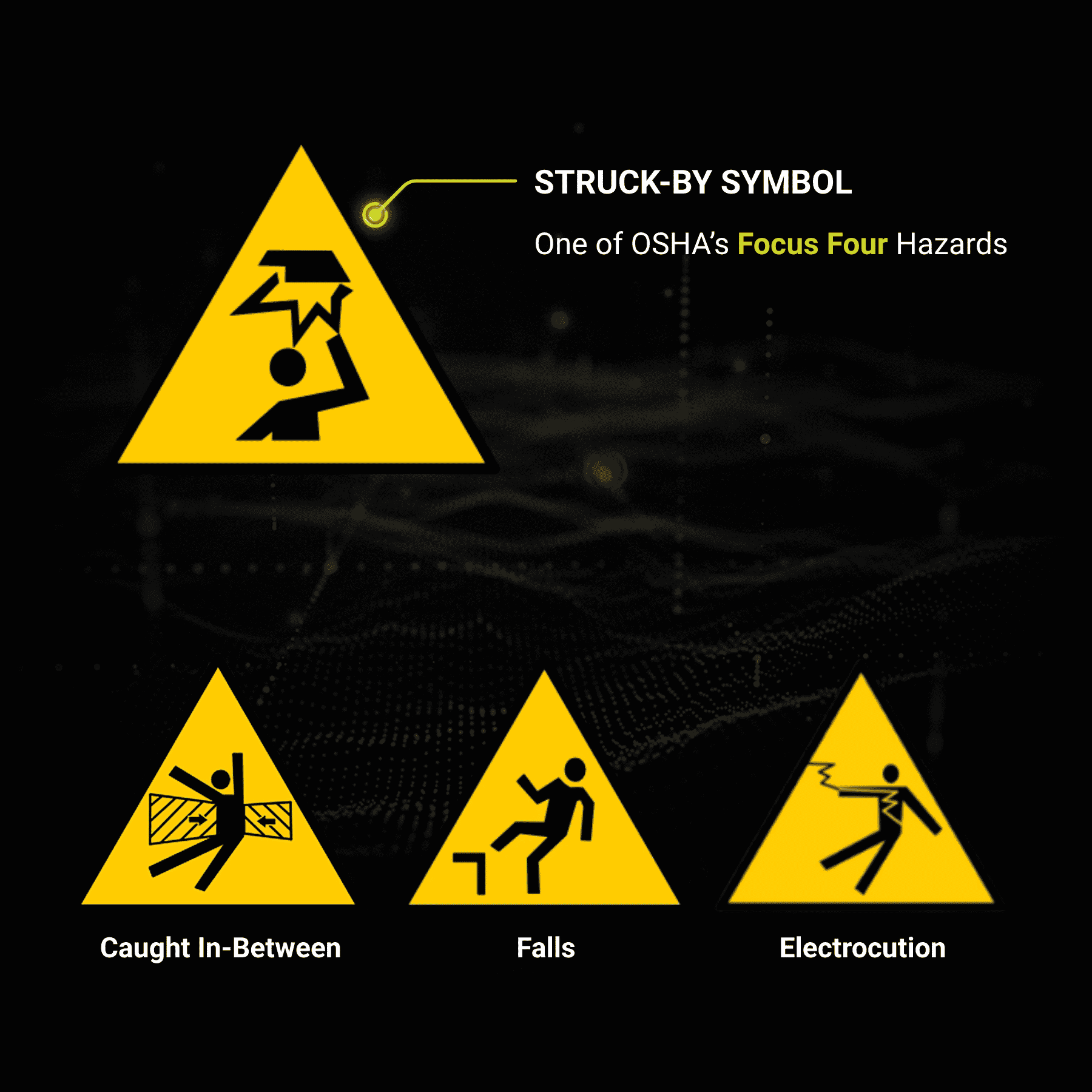
OSHA's Focus Four: Struck-By, Caught In-Between, Falls, & Electrocution
The Four Official Categories of Struck-By Hazards
OSHA divides struck-by hazards into four clear categories. Recognizing each one helps safety teams identify risks specific to their operations.
Struck-By Flying Object
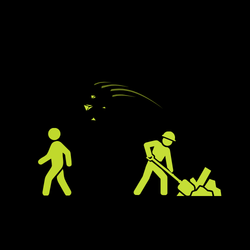
A flying object hazard exists when something is thrown, hurled, or propelled through the air. This includes material separating from a tool or machine, or a fastener discharged from a nail gun or powder-actuated tool.
Struck-By Falling Object
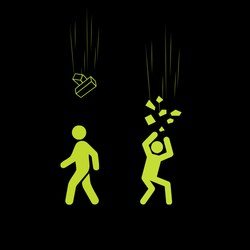
This occurs when the source of injury falls from an elevation to a lower level. Workers beneath cranes, scaffolds, or overhead work are at the greatest risk.
Struck-By Swinging Object
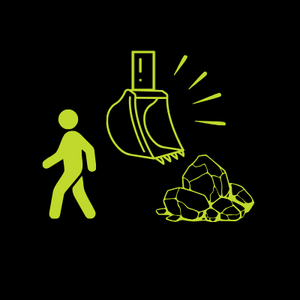
When materials are mechanically lifted, they can swing, twist, or turn and strike nearby workers. Windy conditions increase this risk because suspended loads move more unpredictably.
Struck-By Rolling Object
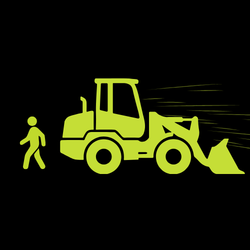
This category is the leading cause of injuries and fatalities among the four, and covers objects rolling, moving, or sliding on the same level as the worker. It includes being struck or run over by a vehicle without being caught underneath it.
For a deeper breakdown of these categories, OSHA's Construction Struck-By eTool provides detailed examples and case reports.
Why Struck-By Incidents Around Heavy Equipment Are Especially Dangerous
Not all struck-by hazards carry the same weight. Incidents involving heavy equipment are among the deadliest.
75%
According to OSHA, approximately 75% of struck-by fatalities involve heavy equipment such as trucks or cranes. The same source notes that one in four "struck by vehicle" deaths involves construction workers, more than any other occupation.
13%
The pattern holds in Canada as well. The Infrastructure Health and Safety Association (IHSA) reports that struck-by and caught-in incidents accounted for 13% of all workplace fatalities in Ontario over a recent ten-year period, making it the third-highest cause of work-related deaths behind motor vehicle incidents and falls, based on IHSA's Struck-By Hazards data.
Industries Where Struck-By Risk is Highest
Struck-by hazards appear wherever workers on foot share space with heavy equipment. The risk is highest in industries built around mobile machinery and active work zones, including:
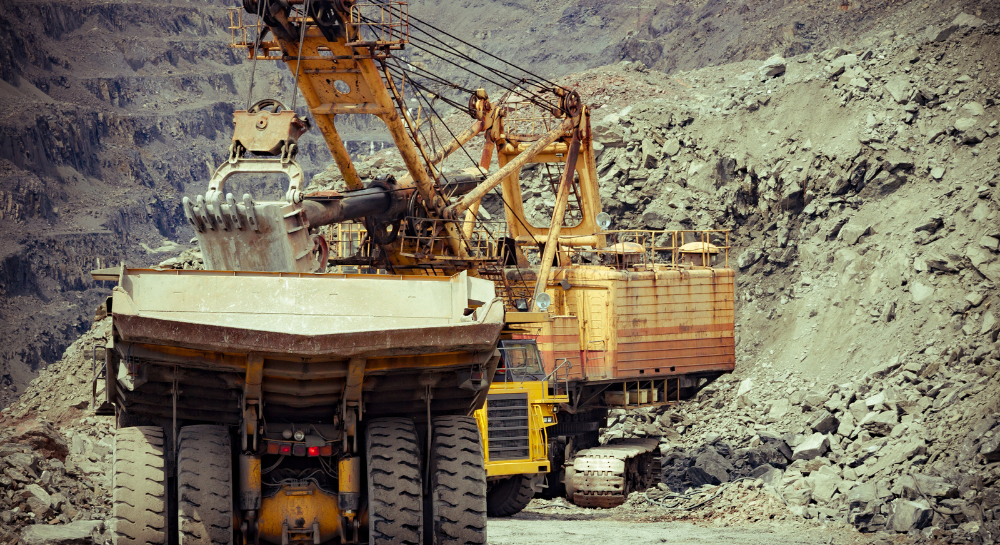
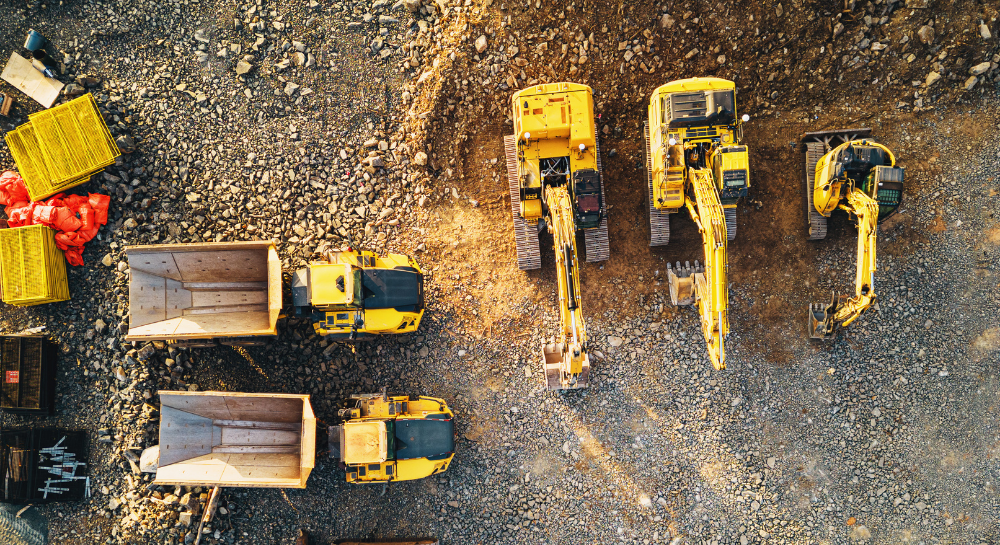
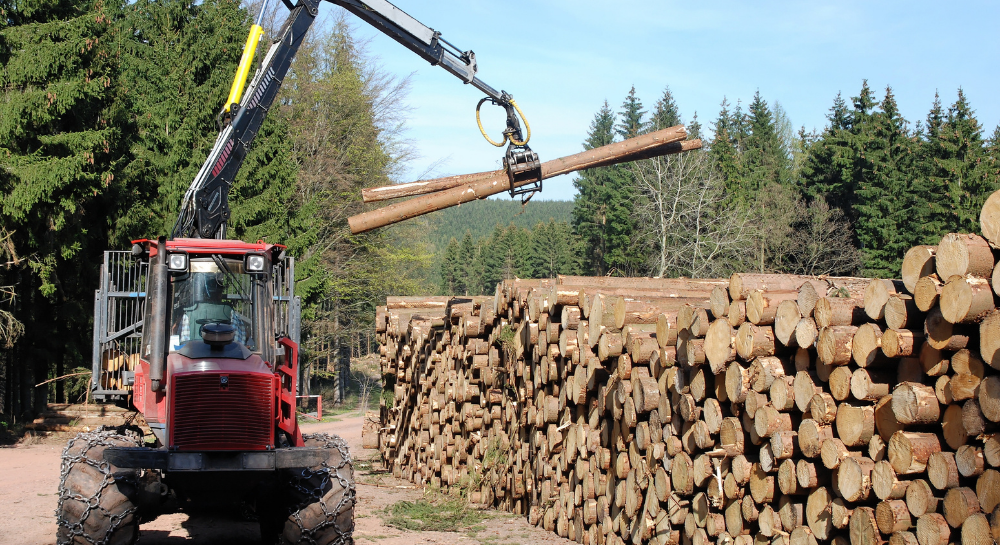

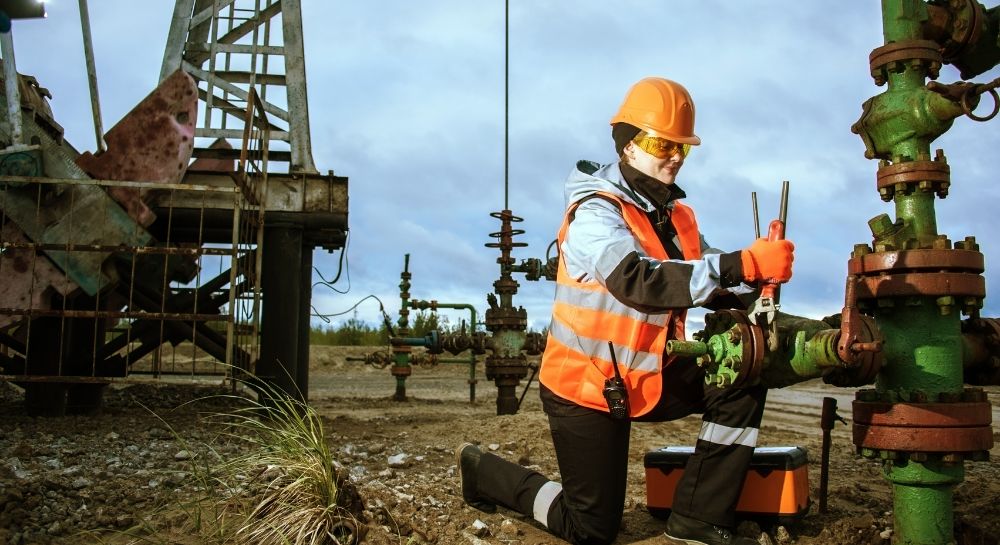

Across all of these sectors, the common denominator is the same: people and powerful machines occupying the same space, often at the same time.
The Role of Blind Spots in Struck-By Incidents
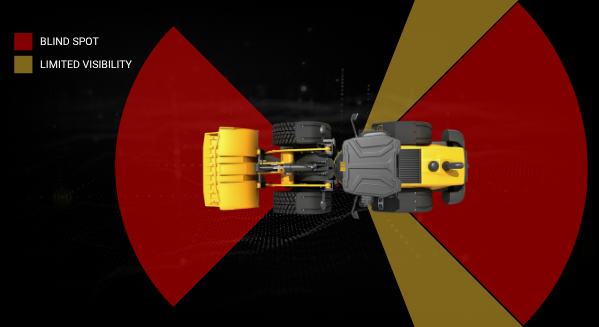
One factor sits at the centre of most equipment-related struck-by incidents: operator blind spots.
Large machines have areas around them that the operator simply cannot see, no matter how attentive they are. Mirrors, cameras, and backup alarms all help, but each depends on the operator seeing, hearing, and reacting in time. In noisy, dusty, high-pressure environments, that chain of human vigilance can break down easily. A worker standing in a blind spot behind a reversing loader may be completely invisible to the person in the cab.
OSHA case reports repeatedly describe this scenario, where an operator was unaware they had struck a worker approaching from a blind zone. Automated detection that does not depend on constant human attention has become an essential layer of added protection.
Moving From Awareness to Prevention
Understanding what a struck-by incident is gives safety leaders the foundation to act. The next step is closing the gap that blind spots and human limitations leave behind.
SCAN~LINK's Armour System addresses that gap directly. Using passive RFID technology, the system instantly detects tagged workers who enter the danger zone around heavy equipment, alerts the operator with visual and audible warnings inside the cab, and sounds an external alarm to warn the worker on foot. Every detection is automatically logged, giving safety teams the data they need to identify high-risk areas and support compliance reporting. Because the tags are passive, they require no batteries or maintenance, and the system performs reliably in the dust, noise, and low-light conditions where traditional safeguards fall short.
To continue building your struck-by prevention strategy, explore the full Struck-By Prevention Hub or see How SCAN~LINK Works to understand how passive RFID proximity detection protects workers.
FAQs About Struck-By Incidents & Prevention
Find answers to common questions about struck-by incidents, their causes, and how organizations can reduce worker exposure around mobile equipment.
What is the difference between struck-by and caught-in or caught-between hazards?
A struck-by hazard happens when a worker is hit by a moving object, vehicle, or piece of equipment. A caught-in or caught-between hazard occurs when a worker is squeezed, pinned, or crushed between two objects. The key difference is impact versus compression.
What are the four types of struck-by hazards?
The four recognized types are struck-by flying objects, falling objects, swinging objects, and rolling objects. Each describes a different way a moving object can make contact with a worker on foot. Around heavy equipment, rolling and swinging hazards are especially common.
Why are struck-by incidents a priority for OSHA?
Struck-by is one of OSHA's "Focus Four" construction hazards, the group responsible for the majority of construction fatalities. Approximately 75% of struck-by fatalities involve heavy equipment such as trucks or cranes, according to OSHA. This high fatality rate is why prevention deserves priority attention on every jobsite.
How can I prevent struck-by incidents on my jobsite?
Prevention works best as a layered system of clear procedures, worker training, site controls, and reliable detection. Because traditional safeguards depend on constant human vigilance, adding passive RFID people-detection helps protect workers even when line of sight fails.
We're Here to Support Your Safety Goals
Contact us to learn how SCAN~LINK’s passive RFID safety solutions improve safety and compliance, or request pricing and a detailed quote tailored to your jobsite.
Contact Us
Contact Us
13 Windward Dr.
Unit 204
Grimsby, Ontario
L3M 4E8
T: 1-905-304-6100
Toll Free: 1-866-554-5582
info@scan-link.com