
How to Use Near-Miss Data to Prevent Struck-By Incidents
Turn Today's Close Calls Into Tomorrow's Prevention
Every serious struck-by incident is usually preceded by warning signs. A worker steps into a blind spot, and a machine reverses a moment too soon. Nobody gets hurt, so the moment passes without a report. But that near miss carried the same conditions as a fatal accident, minus the outcome. When you capture and act on near-miss data, you gain the chance to fix a hazard before it costs someone their safety.
This guide explains how near-miss data works as a prevention tool around heavy equipment, why so many close calls go unrecorded, and how passive RFID detection logging captures these events automatically.
What Counts as a Near-Miss Around Heavy Equipment?
A near miss is an unplanned event that could have caused injury or damage but did not. Around heavy-equipment, a near miss happens whenever a worker on foot enters the danger zone of a moving machine without contact occurring.
Common near-miss scenarios on industrial worksites include:
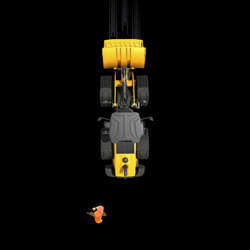
A ground worker walking behind a reversing loader that stops in time.
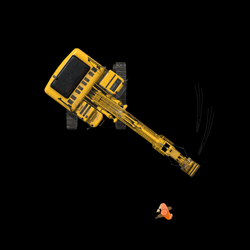
A spotter stepping into an excavator's swing radius.
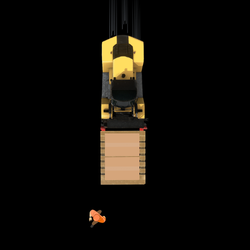
A worker on foot stepping in the path of a loaded forklift.
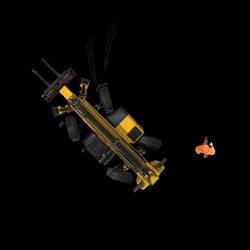
A worker entering a blind spot when an operator repositions a machine.
Each of these scenarios represents a real exposure to struck-by risk. But once the moment passes, the opportunity to learn from it can disappear with it. Without a record of where, when, and how near misses occur, safety leaders have little visibility into the conditions that put workers at risk.
Near-miss detection data changes that. By recording these events, safety teams can identify recurring hazards, high-risk areas, and patterns of worker-equipment interaction, then use that information to take targeted action before a near miss becomes an injury.
Why Near-Misses Go Unreported, and Why That's Dangerous
Many near misses never make it into a safety record. This is one of the most persistent challenges safety leaders face because unreported close calls can leave important hazards and patterns hidden.
Near misses go unreported for practical reasons:
- No injury, no report. When nobody is hurt, a close call may not seem urgent enough to stop work and document.
- Reporting friction. Manual near-miss forms take time and effort that busy crews cannot always spare mid-shift.
- Normalization of risk. On fast-paced sites, repeated close calls can start to feel routine, making them less likely to be reported.
- Simple oversight. In the moment, the near miss passes, work continues, and the memory fades before the shift ends.
The danger is that unreported near misses leave you blind to the exact hazards most likely to cause your next serious incident. If those close calls stay undocumented, you lose the opportunity to identify and correct dangerous patterns before someone is hurt. This is where automated detection and logging can provide another source of actionable safety data.
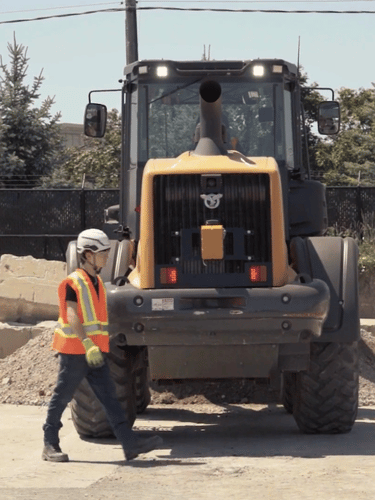
Worker entering the blind spot of a loader
How Passive RFID Detection Logging Captures Near Misses Automatically
The SCAN~LINK Armour System™ captures every detection event automatically. Instead of depending on a worker to remember, report, and document a close call, the system records it the moment it happens.
Here is how SCAN~LINK's passive RFID detection logging works:
Detection
An antenna mounted on the equipment creates a customizable detection zone and continuously scans for passive RFID tags embedded into worker PPE.
Two-Way Alerts
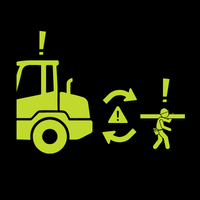
When a tagged worker enters the danger zone, the operator receives an immediate visual and audible warning inside the cab, and an external alarm warns the worker on foot.
Logging

At the same instant, the system records the event with a precise timestamp, the unique worker tag ID and equipment ID, and the detection zone location for review.
Because the tags are passive, they require no batteries, no charging, and no maintenance. The worker simply wears a passive RFID-embedded safety vest and/or a hard hat with passive RFID tags affixed to it, and every time they enter a danger zone, the event is captured.
This produces an objective, consistent record of near-misses across your operation. Every near miss becomes a data point with a date & time, ID, and location. After some time, those data points reveal exactly where and when your workers and machines come dangerously close.
Turning Detection Events Into Actionable Insight with SCAN~VUE
SCAN~VUE is SCAN~LINK's data and analytics platform, and it transforms individual detection events into the insight your safety team can act on.
SCAN~VUE gives you:
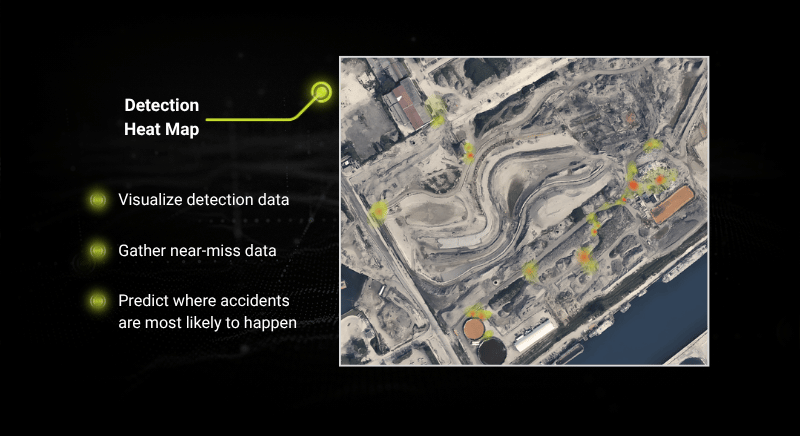
- Detection heat maps. Visual maps show where proximity events cluster across your site, making high-risk zones immediately obvious.
- Detection trends over time. Track whether near-miss frequency is rising or falling, and measure the impact of the safety changes you make.
- High-risk zone identification. Pinpoint the specific locations, machines, and times of day that generate the most exposure.
- Automated reporting. Generate timestamped detection records for safety reviews, toolbox talks, and compliance documentation without manual data entry.
Heat Map Example: This heat map shows clusters of near-miss detections where heavy equipment and ground crews interact. These patterns would be nearly impossible to spot through manual reporting, but the data makes it clear. Armed with that insight, you can adjust traffic routing, reposition the work area, or add a spotter during peak hours. This near-miss data points you directly to the fix.
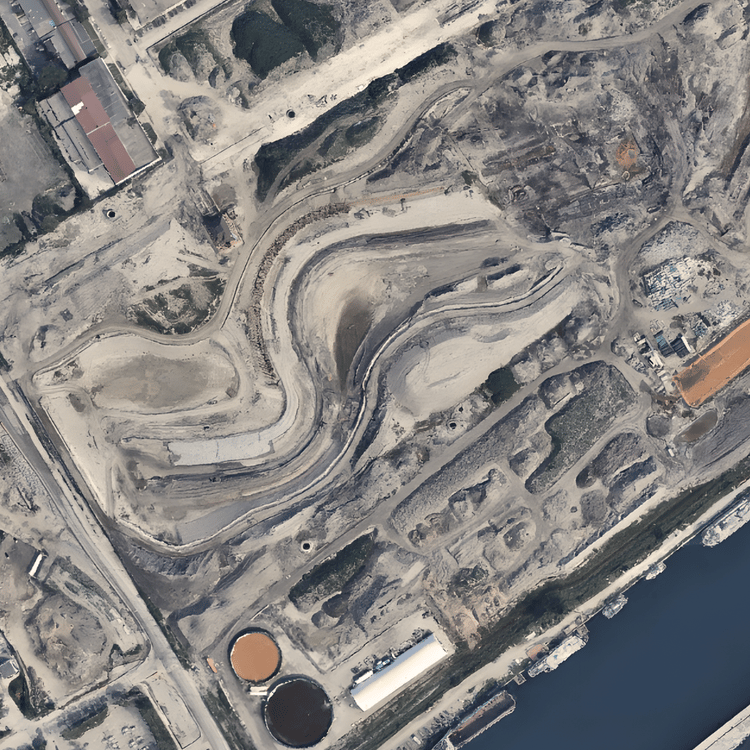
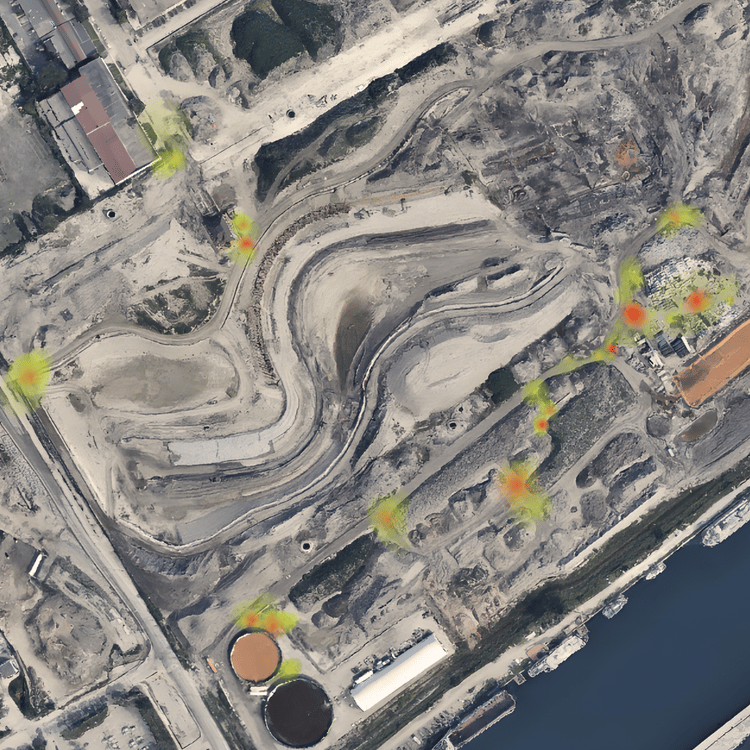
SCAN~VUE Heat Map
Move the slider to see where high-risk areas are on this jobsite.
This is the shift from reactive to proactive safety. Instead of investigating after an incident, you identify and correct the conditions that create risk before an incident ever occurs.
How Near-Miss Data Supports Continuous Improvement and Compliance
Near-miss data does more than prevent individual incidents. It becomes the foundation of a stronger, more defensible safety program over time.
Continuous Safety Improvement
Objective detection data lets you measure the effect of every safety intervention. When you change a traffic pattern or re-train a crew, SCAN~VUE trends show whether close calls actually decline. This turns safety management into a measurable cycle: identify the hazard, act on it, and confirm the result with data rather than assumption.
Stronger Safety Reporting
Automated logging gives your team a reliable source of near-miss data. Instead of piecing together manual reports, safety leaders can review consistent, timestamped records to support toolbox talks, near-miss reviews, and leadership updates. The data speaks with authority because it reflects what actually happened on the ground.
Compliance and Due Diligence

For safety officers and managers, demonstrating due diligence to executives, insurers, and regulators is a constant responsibility. A documented record of proximity events and corrective actions provides evidence that your organization takes struck-by risk seriously and acts on it. That audit-ready trail strengthens and demonstrates a proactive safety culture.
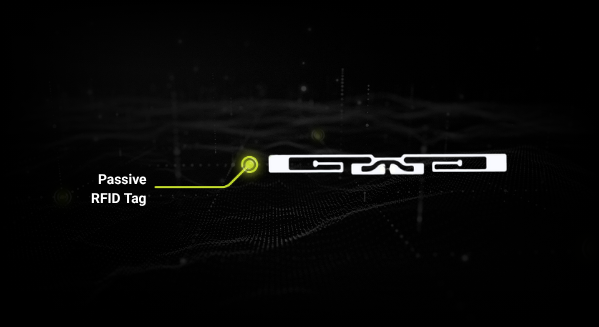
The underlying technology behind this capability is passive RFID, which enables person-specific detection that logs only tagged workers, not passing objects or debris. That precision keeps your data meaningful and your reporting trustworthy.
Explore More Resources About SCAN~VUE & Telematics, Passive RFID Technology, and Struck-By Prevention
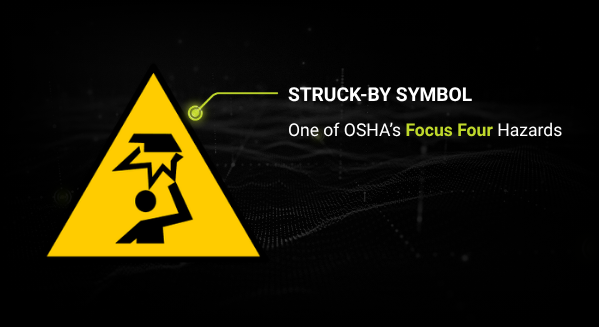
Struck-By Prevention
Learn about struck-by hazards, their common causes, and how organizations can reduce worker exposure around heavy equipment.
SCAN~VUE & Telematics
Learn how SCAN~VUE and telematics capture detection events, provide actionable data, and help safety teams identify risks across their worksites.
Understanding Passive RFID
Learn about passive RFID technology and how it enables person-specific detection when used as a proximity detection system.
FAQs About Near Misses and Data & Analytics
Find answers to common questions about near-miss data, detection events, and how organizations can use this information to identify hazards and prevent struck-by incidents.
What is the difference between a near miss and a struck-by incident?
A struck-by incident occurs when a worker is hit by a moving object, piece of equipment, or vehicle. A near miss involves the same dangerous conditions, a worker on foot entering the danger zone of moving equipment, but without contact occurring. Near misses matter because they share the same root causes as serious incidents. Capturing and acting on them lets you address hazards before an injury happens.
How does passive RFID capture near-miss data automatically?
When a worker wearing passive RFID-tagged PPE enters an equipment's detection zone, the SCAN~LINK Armour System alerts both the operator and the worker, and simultaneously logs the event. Each record includes a precise timestamp, the unique worker tag ID, and the detection zone location.
What kinds of insights can SCAN~VUE provide from near-miss data?
SCAN~VUE turns detection events into actionable insight through heat maps that reveal where proximity events cluster, trend analysis that shows whether near misses are rising or falling over time, high-risk zone identification, and automated reporting. Together, these tools help safety teams pinpoint the specific locations, machines, and times of day that create the most risk, then measure the impact of the changes they make.
Can near-miss detection data support compliance and safety audits?
Yes. SCAN~VUE produces timestamped, objective records of every detection event across your operation. This documentation gives safety leaders an audit-ready trail that demonstrates due diligence, supports regulatory reporting, and provides evidence of a proactive approach to struck-by prevention. Reliable data strengthens both your compliance position and your ability to show measurable safety progress.
We're Here to Support Your Safety Goals
Contact us to learn how SCAN~LINK’s passive RFID safety solutions improve safety and compliance, or request pricing and a detailed quote tailored to your jobsite.
Contact Us
Contact Us
13 Windward Dr.
Unit 204
Grimsby, Ontario
L3M 4E8
T: 1-905-304-6100
Toll Free: 1-866-554-5582
info@scan-link.com