
Common Causes of Struck-By Accidents
Struck-by accidents around heavy equipment share a striking trait: they are rarely random. Behind almost every incident lies a predictable set of conditions that put a worker on foot and a moving machine in the same space at the same moment. When you understand these root causes, you can target them directly and build a prevention program that addresses the real problem rather than the symptom.
This guide breaks down the most common causes of struck-by accidents on jobsites, why each one persists even on well-run operations, and how you can close the gaps they create. For a broader overview of what these incidents are and how they are classified, see What is a Struck-By Incident?
Why Struck-By Accidents Keep Happening
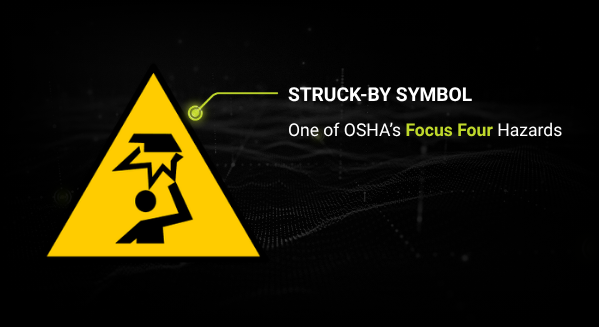
The fatality data explains why this hazard deserves priority attention. Struck-by is one of OSHA's "Focus Four" construction hazards, the group of hazards responsible for the majority of construction fatalities, according to OSHA. Approximately 75% of struck-by fatalities involve heavy equipment such as trucks or cranes, and one in four "struck by vehicle" deaths involves a construction worker, more than any other occupation, per OSHA.
Those numbers reflect a pattern. The same causes appear again and again across construction, mining, oil and gas, forestry, waste, and heavy industry. Identify them on your site, and you can act before an incident forces the issue.
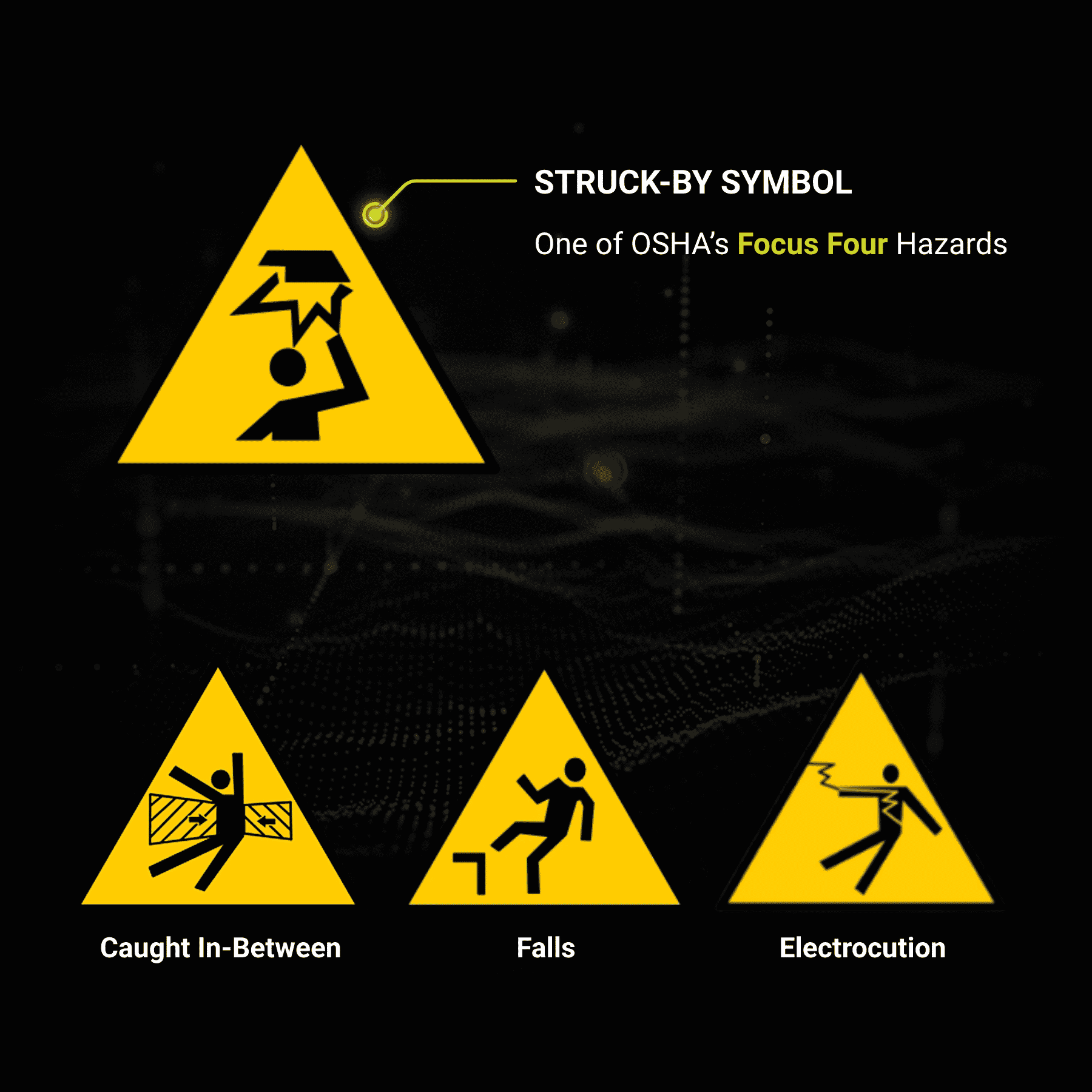
OSHA's Focus Four: Struck-By, Caught In-Between, Falls, & Electrocution
1. Equipment Blind Spots
Blind spots are the single largest contributor to struck-by incidents around heavy equipment. Every large machine has zones the operator simply cannot see from the cab, created by the size of the body, the position of the seat, and the attachments or loads the machine carries.
- They exist on every machine. Loaders, excavators, dump trucks, dozers, forklifts, and telehandlers all have areas the operator cannot view directly, particularly behind and along the sides.
- They grow with machine size. On a larger machine, the area a driver cannot see can extend well beyond the length of the vehicle, easily concealing a worker standing directly behind it.
- They are not always an operator failure. A skilled, attentive operator managing a load, a work sequence, and a schedule still cannot see a worker standing in a zone the cab physically blocks from view.
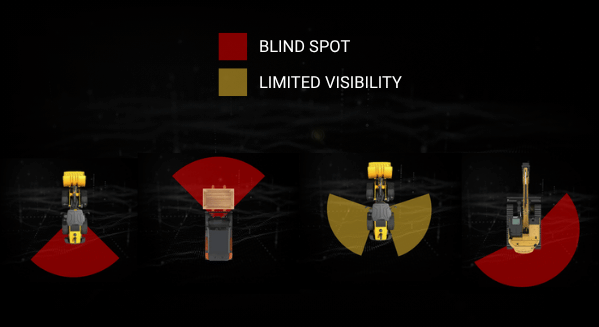
Because blind spots are a matter of machine geometry rather than human error, they cannot be trained away. They can only be managed. For a deeper look at how to address them, see Blind Spot Risks and Awareness.
2. Poor Visibility Conditions
Active jobsites are demanding environments, and the conditions that define them work directly against safe operation. Even where a worker would normally be visible, environmental factors can hide them at the worst possible moment.
These conditions are especially common:
- Dust. Airborne dust from excavation, hauling, and material handling reduces how far and how clearly an operator can see. On mining and aggregate sites, dust can obscure a worker within a short distance of the machine.
- Low light. Early mornings, night shifts, and poorly lit work areas cut visibility sharply. High-visibility apparel helps, but it still depends on the worker being within the operator's line of sight.
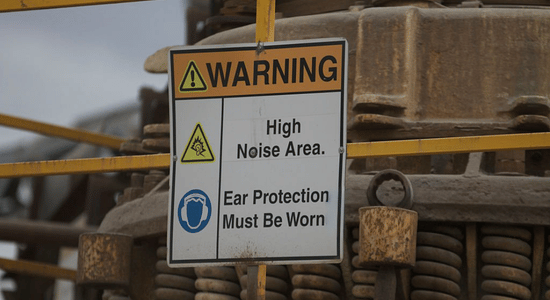
- Noise. Constant engine noise, backup alarms, and equipment operation make it difficult for workers to hear approaching machines and for operators to catch verbal warnings. This can also lead to noise fatigue.
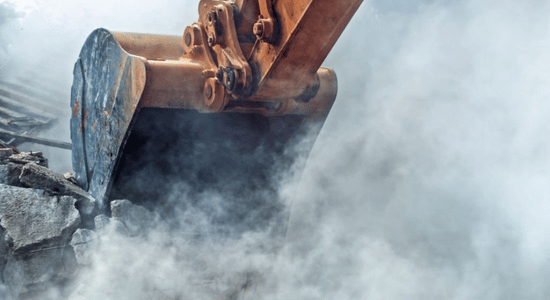
Dust
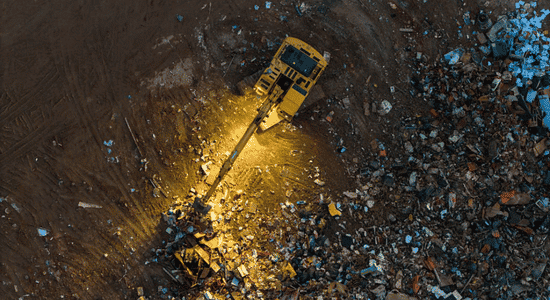
Low Light
Noise
These conditions rarely appear one at a time. A dusty, noisy site at dusk stacks multiple visibility challenges together, and each one narrows the operator's ability to detect a worker before contact.
3. Worker Positioning
Where a worker stands relative to a machine often determines whether they are safe or exposed. Struck-by incidents frequently occur when a worker on foot enters a danger zone without the operator's awareness.
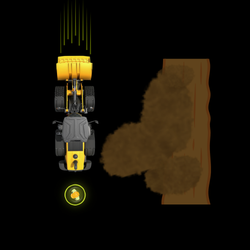
Standing in the reversing path of a truck or loader as it backs up
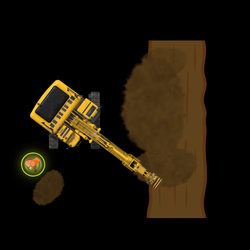
Working within the swing radius of an excavator or crane as superstructure rotates
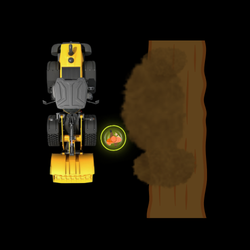
Passing between machines and fixed obstacles, where escape room disappears
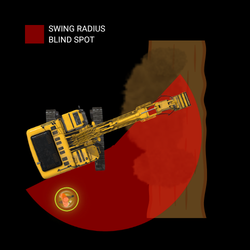
Approaching a machine from a blind side to communicate with the operator
Congested sites make positioning risk worse. When people and equipment share tight ground, the number of moments where a worker occupies a danger zone multiplies, and so does the exposure.
4. Communication Gaps Between Operators and Ground Crews
Many struck-by incidents trace back to a breakdown in communication between the operator and the workers on foot around the machine. When both parties do not share the same understanding of who is where and what happens next, the margin for error disappears.
These gaps take several forms:
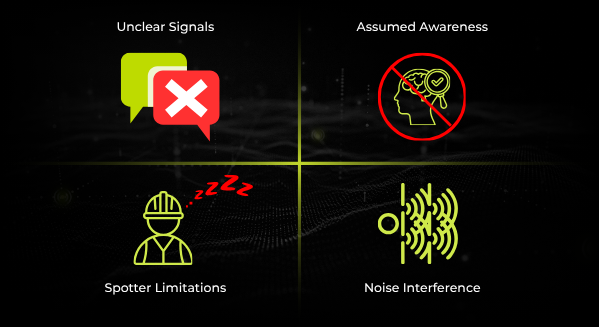
- Clear or inconsistent signals. When hand signals are not standardized and confirmed, an operator may misread an instruction or begin moving before a worker is clear.
- Assumed awareness. A worker may assume the operator has seen them, while the operator assumes the area behind the machine is empty. Both assumptions can be wrong at the same time.
- Spotter Limitations. Spotters add real value, but their attention can lapse during long shifts, and they introduce another person into the hazard zone.
- Noise Interference. As noted above, a busy site can drown out verbal warnings exactly when they matter most.
The Limits of Visibility, Communication, and Reaction
Look closely at these causes and a common pattern emerges. Blind spots, poor visibility, worker positioning, and communication gaps can all make it harder for people to see, hear, or recognize a hazard in time.
These challenges aren't necessarily the result of someone failing to pay attention. They are often inherent to busy worksites, where equipment, people, noise, dust, and changing conditions can limit what a person can perceive at any given moment. An operator can be fully attentive and still be defeated by a blind spot. A worker can wear high-visibility apparel and still disappear in dust or low light. A crew can follow every protocol and still face a moment where a signal is missed. Each of these controls is necessary, and each has a role to play, but none of them removes the inherent limitations of human perception.
The strongest safety programs recognize this limit and add a layer that works even when site conditions create gaps in awareness.
How Passive RFID Detection Addresses These Causes
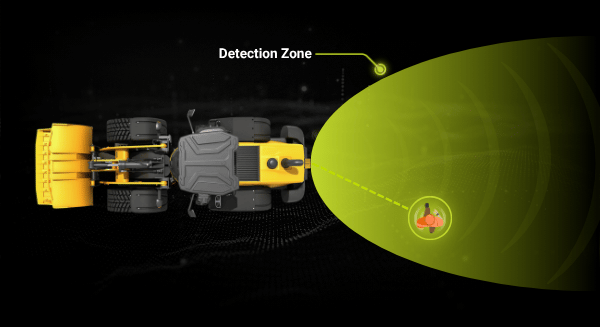
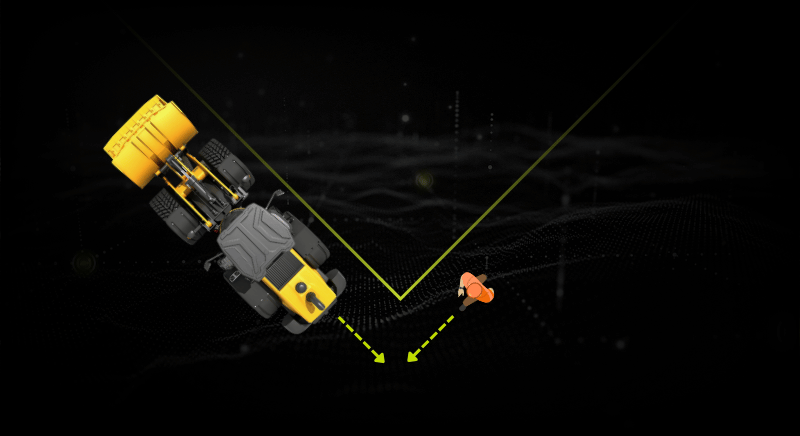
SCAN~LINK's Armour System™ targets the exact weakness these causes share. Rather than depending on the operator to see a worker or the worker to hear a machine, the system uses passive RFID technology to detect tagged workers the moment they enter the danger zone, including the zones an operator cannot see.
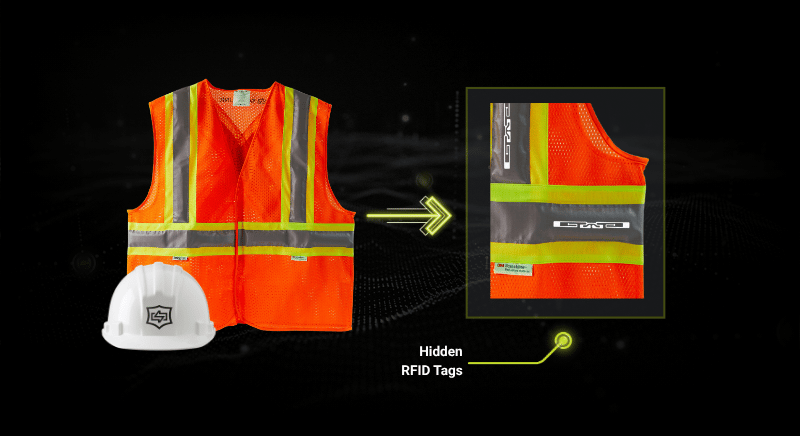
Because the passive RFID tags are embedded directly in high-visibility PPE, they require no batteries or charging, which keeps the system reliable shift after shift and removes adoption friction. Every detection is logged automatically with a timestamp and worker ID, giving your safety team audit-ready data to identify high-risk zones, support compliance reporting, and target improvements where they matter most.
Turn Predictable Causes Into Preventable Incidents
Understanding what a struck-by incident is gives safety leaders the foundation to act. The next step is closing the gap that blind spots and human limitations leave behind.
SCAN~LINK's Armour System addresses that gap directly. Using passive RFID technology, the system instantly detects tagged workers who enter the danger zone around heavy equipment, alerts the operator with visual and audible warnings inside the cab, and sounds an external alarm to warn the worker on foot. Every detection is automatically logged, giving safety teams the data they need to identify high-risk areas and support compliance reporting. Because the tags are passive, they require no batteries or maintenance, and the system performs reliably in the dust, noise, and low-light conditions where traditional safeguards fall short.
To continue building your struck-by prevention strategy, explore the full Struck-By Prevention Hub or see How SCAN~LINK Works to understand how passive RFID proximity detection protects workers.
Explore More Resources About Blind Spot Awareness and Proximity Detection
Struck-By Prevention
Learn about struck-by hazards, their common causes, and how organizations can reduce worker exposure around heavy equipment.
What is a Proximity Detection System?
Learn what proximity detection systems are, how they work, and how they help protect workers around heavy equipment.
Blind Spot Risks & Awareness
Learn about blind spot hazards, why they occur, and how to improve worker awareness around heavy equipment.
FAQs About Struck-By Incidents, Causes, and Prevention
Find answers to common questions about struck-by incidents, their causes, and how organizations can reduce worker exposure around mobile equipment.
What is the most common cause of struck-by accidents?
Equipment blind spots are the most common cause of struck-by accidents around heavy machinery. Every large machine has zones the operator cannot see from the cab, and a worker standing in one of those areas can go unnoticed until it is too late. Poor visibility, worker positioning, and communication gaps compound the risk.
How does environmental noise impact struck-by risk?
Constant engine noise, alarms, and machinery can make it harder to hear warnings or communicate clearly. Continuous noise can also cause noise fatigue, making important sounds harder to distinguish in a busy environment.
Passive RFID proximity detection adds another layer of awareness with a distinct audible and visual alert that helps cut through the noise. SCAN~LINK alerts both the equipment operator and ground worker when a tagged person enters the detection zone.
Can operator training alone eliminate struck-by hazards?
No, operator training alone cannot eliminate struck-by hazards. Even a fully trained, attentive operator is defeated by a blind spot, and a worker following every protocol can still disappear in dust or low light. Training is essential, but it still relies on perfect human attention shift after shift. The strongest programs add a layer of automated detection that works even when human vigilance falls short.
We're Here to Support Your Safety Goals
Contact us to learn how SCAN~LINK’s passive RFID safety solutions improve safety and compliance, or request pricing and a detailed quote tailored to your jobsite.
Contact Us
Contact Us
13 Windward Dr.
Unit 204
Grimsby, Ontario
L3M 4E8
T: 1-905-304-6100
Toll Free: 1-866-554-5582
info@scan-link.com