
Blind Spot Awareness Around Heavy Equipment
Understanding Hidden Danger Zones and How to Detect Workers Within Them
Blind spots are one of the most persistent safety challenges on any worksite where people and heavy equipment share space. When an operator cannot see a worker on foot, even a routine movement can lead to a serious incident. Understanding where these hidden zones exist, why they matter, and how detection technology helps close the awareness gap is a key part of protecting ground crews around mobile machinery.
This guide explains what blind spots are, where they commonly occur, and how passive RFID supports safer operations by detecting tagged workers in areas the operator may not be able to see directly.
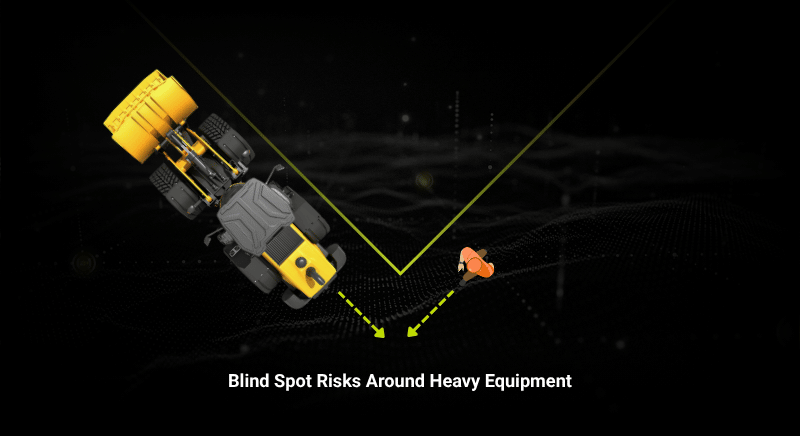
What Is a Blind Spot Around Heavy Equipment?
A blind spot is an area around a piece of equipment where the operator has limited or no direct visibility. These zones exist because of equipment size, cab design, attachments, loads, and the position of the operator relative to the ground.
Heavy machinery is built for power and capacity, not for all-around visibility. A large excavator, wheel loader, haul truck, or dozer can have significant areas around it that the operator simply cannot see from the cab, even with mirrors and cameras in place. When a worker on foot enters one of these areas, the operator may not know they are there.
If an operator cannot see a worker, the operator cannot account for that worker when moving, turning, reversing, or swinging the machine. That gap in awareness is where blind spot incidents happen.
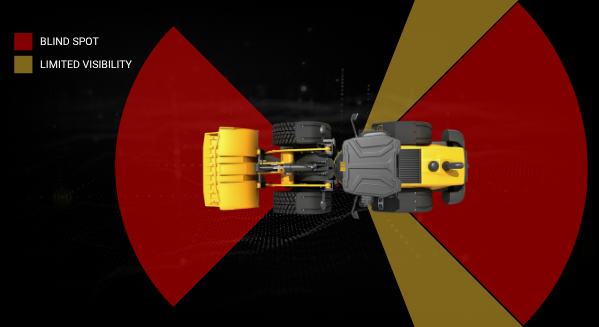
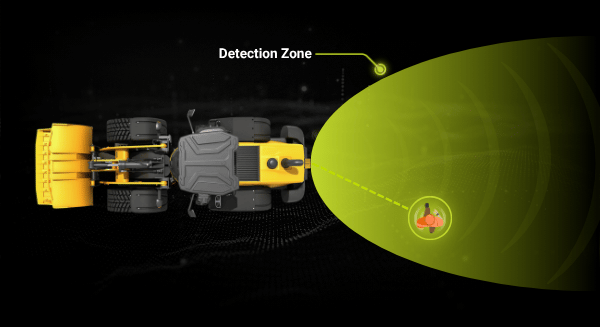
Example: Wheel loader blind spots
What Are the Most Common Blind Spot Zones?
Blind spots vary by machine type, size, and configuration, but several high-risk zones appear consistently across heavy equipment.
Directly Behind the Machine
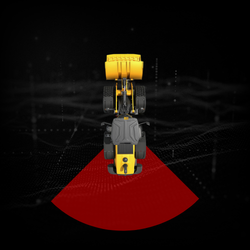
The rear of most heavy equipment is one of the largest and most dangerous blind spots, especially during reversing. The larger the machine, the larger this hidden zone tends to be.
Along the Sides of the Machine
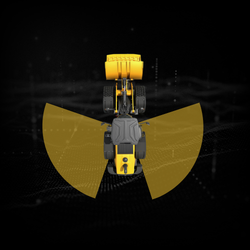
Areas running along both sides of a machine can fall outside the operator's direct line of sight, particularly on larger equipment where the cab sits high or off to one side.
Directly in Front of Large Machines
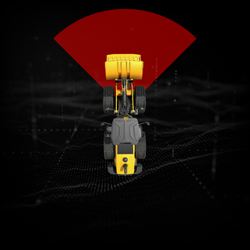
On larger equipment, the height of the cab can create a blind zone immediately in front of the machine, close to the ground where a worker may be standing or walking.
Around Attachments & Swing Zones
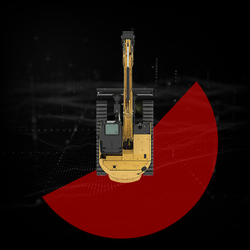
Buckets, booms, counterweights, and other attachments can block visibility and create moving hazard zones. Equipment that rotates, such as excavators, adds a swing path that changes the shape of the danger zone as the machine operates.
Around Corners & Pinch Points
Where machines operate close to structures, stockpiles, or other equipment, corners and tight spaces can hide workers from view until they are already in a high-risk position.
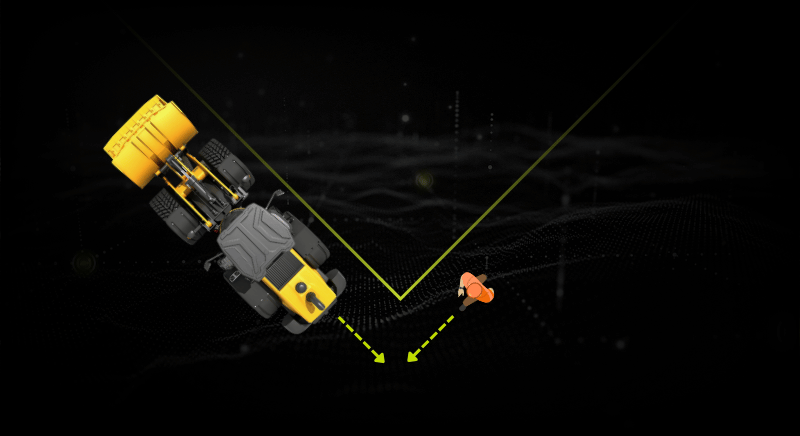
Understanding where these zones exist on the specific equipment and various locations in your operation is the first step toward managing them.
Why Blind Spots Contribute to Struck-By Incidents
Struck-by incidents happen when a worker is hit by moving equipment, a swinging load, or a shifting object. Blind spots are a major contributor because they remove the operator's ability to see and react in time.
Several conditions make blind spot risk worse:
Reversing Equipment
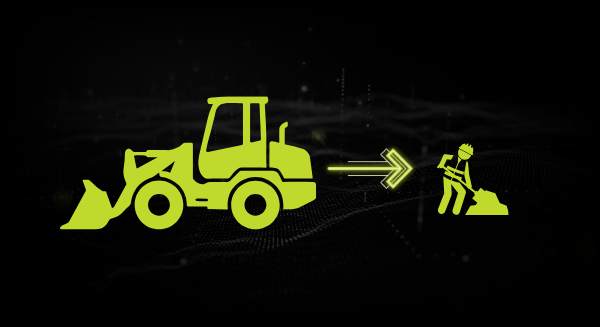
Limited rear visibility can make it difficult for operators to see workers behind or alongside equipment, increasing the risk of a struck-by incident.
Busy & Congested Worksites

Tight spaces bring workers and mobile equipment into close proximity, leaving less room for separation and reaction time.
Reduced Visibility

Low light, rain, dust, fog, and snow can make it harder to see workers, equipment, and potential hazards in the operating area.
Noise & Distraction

Engines, machinery, alarms, and other site activity can make verbal communication and audible warnings harder to rely on.
In these moments, prevention depends on timing. The sooner a worker in a hidden zone is detected, the more opportunity there is for the operator to stop, slow down, or reassess before contact occurs.
For a broader look at how these incidents happen and how to prevent them, see our Struck-By Prevention Hub
How Passive RFID Helps Prevent Struck-By Incidents
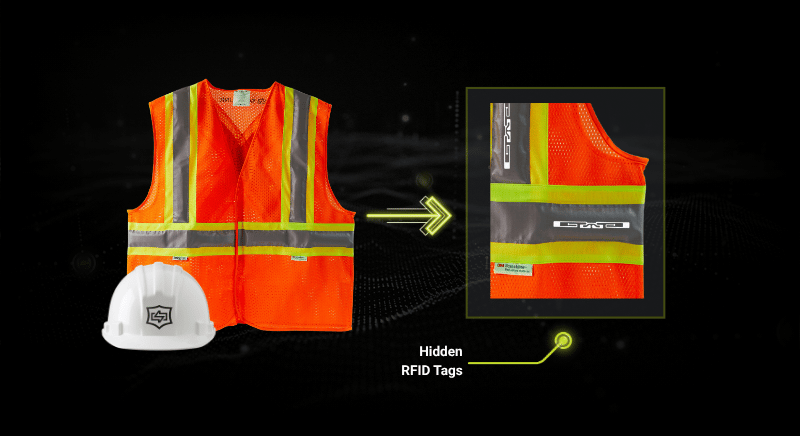
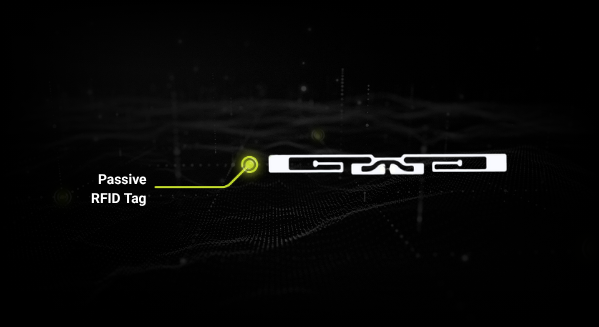
Passive RFID tags are embedded directly into safety vests or safety sashes behind the reflective tape.
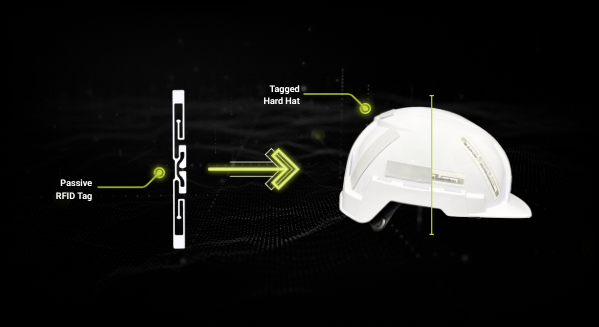
Passive RFID tags are installed on existing hard hats for seamless and non-invasive implementation. They can be installed either on the exterior or interior depending on the hard hat.
Explore More About Passive RFID Detection Systems for Worksite Safety
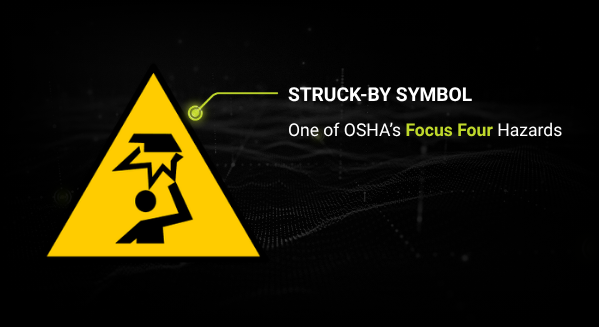
Struck-By Prevention
Learn about struck-by hazards, their common causes, and how organizations can reduce worker exposure around heavy equipment.
What is a Proximity Detection System?
Learn what proximity detection systems are, how they work, and how they help protect workers around heavy equipment.
Passive RFID Detection Technology
Learn about passive RFID as a detection technology for identifying workers in danger zones around heavy equipment.
FAQs
Find answers to common questions about passive RFID technology, how it works, and how it supports worker detection, asset identification, and safety applications.
Why can't I rely on mirrors and cameras alone to eliminate blind spots?
Mirrors and cameras extend an operator's field of view, but they cover fixed angles and depend on the operator looking in the right place at the right moment. In the split second it takes to check a screen or a mirror, a worker on foot can move into an unseen zone. That is why the strongest programs add a layer of automated detection that works even when the operator can't see a ground worker.
Are blind spots the result of operator error or something else?
Blind spots are a matter of machine geometry, not operator error. The size of the machine body, the position of the cab, and the attachments or loads a machine carries all create zones the operator physically cannot see, no matter how skilled or attentive they are. Because these zones cannot be trained away, they must be managed through site controls and reliable detection
How do dust, noise, and low light increase blind spot risk?
Environmental conditions narrow an operator's ability to detect a worker at the worst possible moment. Dust and low light reduce how far and how clearly an operator can see, while constant engine noise and alarms make it harder for workers to hear an approaching machine. These conditions often stack together on a busy jobsite, compounding the risk, which is why detection that does not depend on line of sight or hearing matters.
How does passive RFID detection protect workers in blind spots?
Passive RFID detection identifies a tagged worker the moment they enter the danger zone around a machine, including the areas the operator cannot see. The system issues an instant in-cab alert to the operator while an external alarm warns the worker on foot, so both people are aware at the same time. Because the tags are embedded in high-visibility PPE and require no batteries or charging, the protection stays reliable shift after shift, even in demanding jobsite conditions.
We're Here to Support Your Safety Goals
Contact us to learn how SCAN~LINK’s passive RFID safety solutions improve safety and compliance, or request pricing and a detailed quote tailored to your jobsite.
Contact Us
Contact Us
13 Windward Dr.
Unit 204
Grimsby, Ontario
L3M 4E8
T: 1-905-304-6100
Toll Free: 1-866-554-5582
info@scan-link.com