Detect People Rather than Objects: Advancing Person-Specific Safety with Passive RFID
Blind spots remain one of the biggest risks on construction and industrial jobsites. Traditional cameras and sensors don't always reliably detect people, which can leave workers vulnerable in dangerous and cluttered environments. SCAN~LINK closes that gap by detecting people specifically, ensuring workers are seen even when visibility is limited.
Frequent alarms caused by debris can lead to alarm fatigue, where operators begin to ignore warnings and critical alerts may be missed.
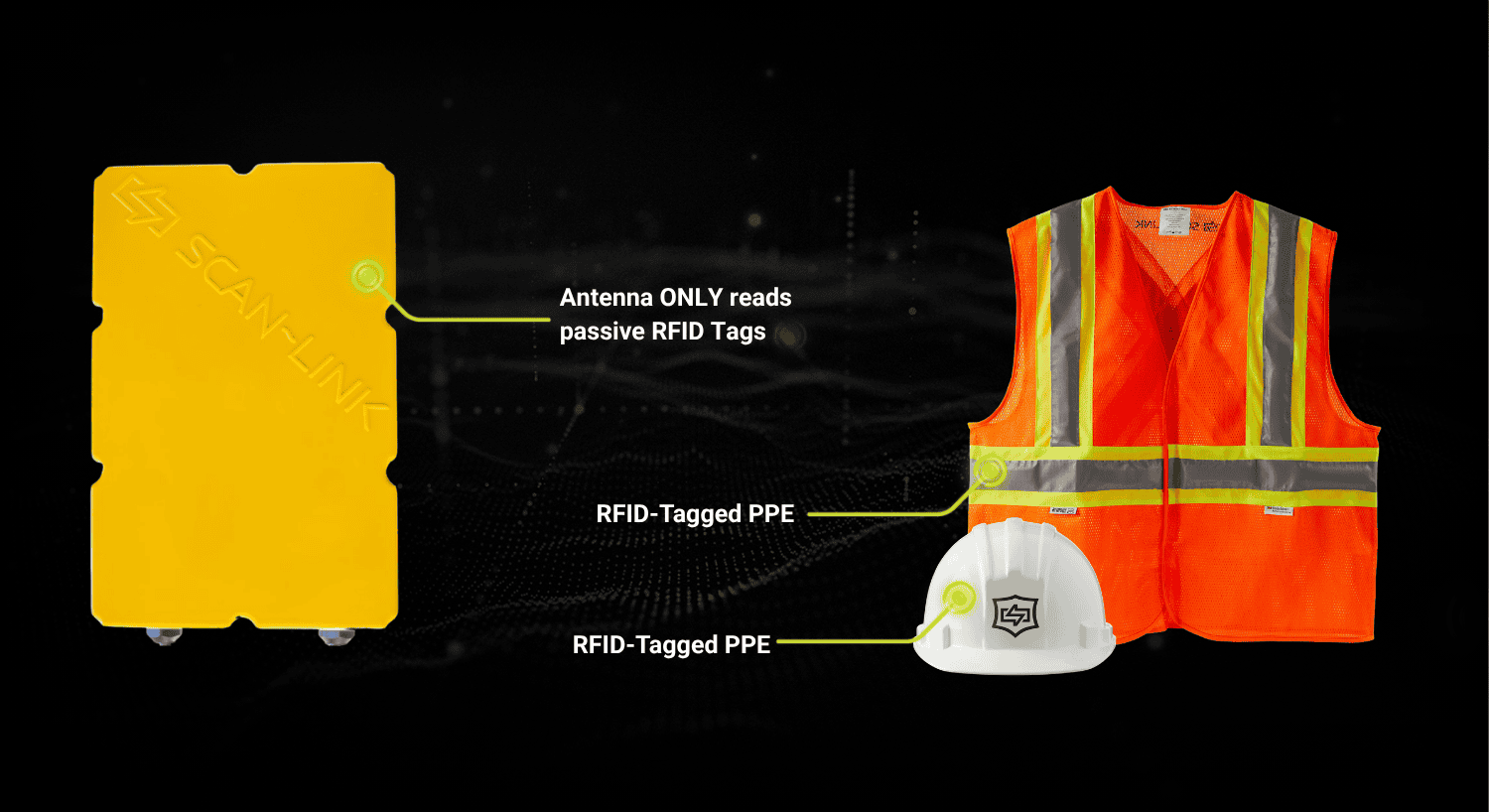
To truly enhance jobsite safety, we need a system that specifically identifies human presence, eliminating false alarms. SCAN~LINK’s passive RFID technology focuses detection exclusively on people rather than objects.
How Nuisance Alarms Lead to Dangerous Blind Spots
For example, an excavator on a road project often works around barriers, pylons, and vehicles. If the system alerts every time it passes one of these objects, the constant alarms can quickly fade into background noise, leading to alarm fatigue as operators become desensitized.
When operators become desensitized, real alerts sound exactly like nuisance alarms. If a worker steps into a blind spot at that moment, the system has failed to protect them.
How Passive RFID Cuts Through the Noise
SCAN~LINK uses passive RFID to create a link between heavy equipment and ground workers. Here is how the system works:
- Ground Worker: Passive RFID tags are embedded in standard safety PPE, such as high-visibility vests, and passive RFID tags are affixed onto existing hard hats. These tags are passive, meaning they require no batteries or maintenance, and remain dormant until within range of a SCAN~LINK antenna mounted on mobile equipment.
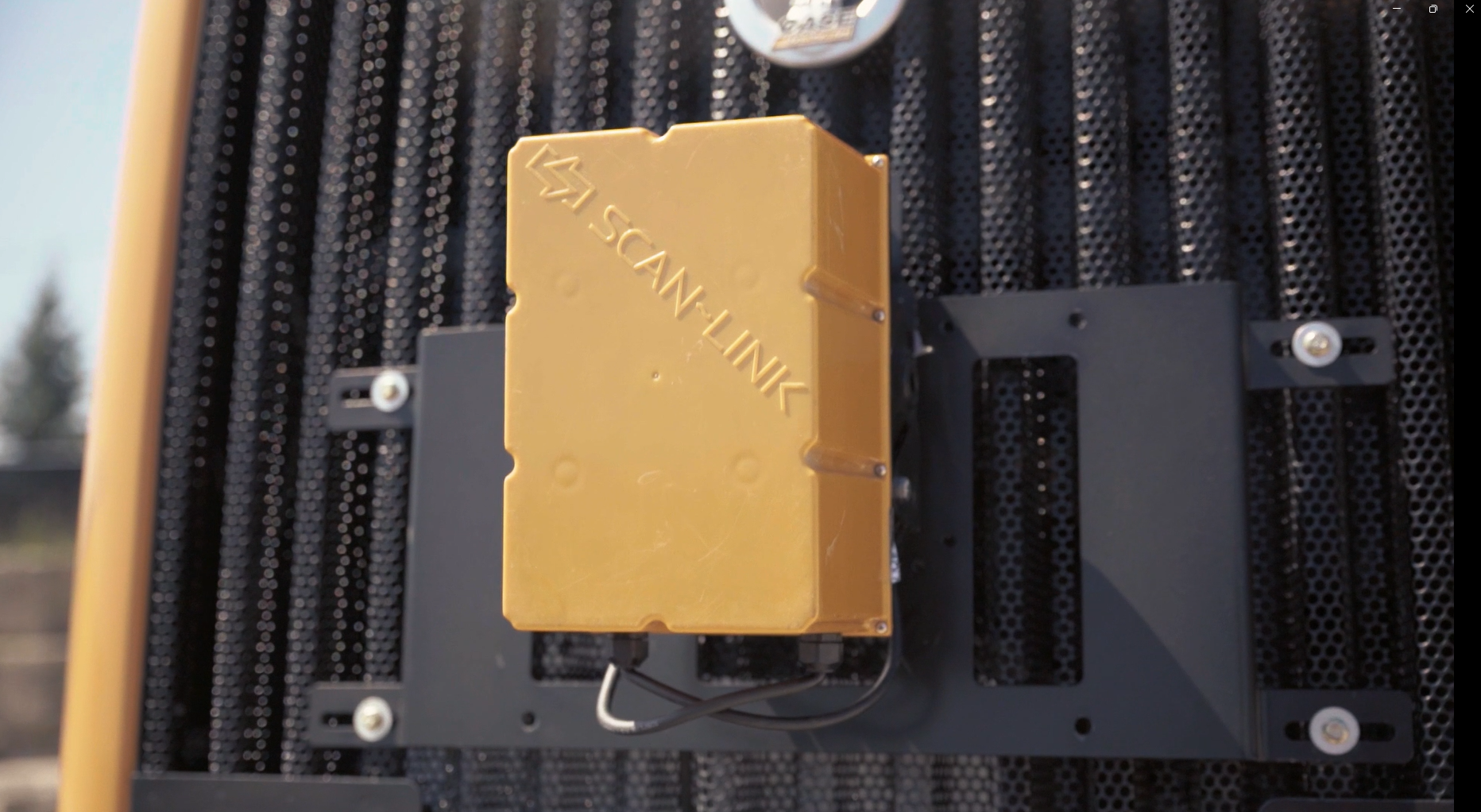
- Heavy Equipment: A SCAN~LINK Antenna is mounted on heavy mobile equipment to create a customizable detection zone around hazardous areas of the machine.
- When a ground worker wearing tagged PPE enters a danger zone, the antenna detects the tag and immediately triggers an audible alert for the worker and audio and visual alerts for the equipment operator. The system is specifically tuned to these tags, so it ignores debris and only reacts to tagged ground workers in hazardous detection zones.
The passive nature of this technology is a significant advantage. Passive tags don't require batteries, which means they don’t require charging schedules and maintenance. With passive RFID, the protection is built into the gear that workers put on every morning. There are no batteries to fail and no electronics to maintain on the worker's end with a life expectancy of 20+ years. It’s rugged, reliable, and always on.
The Benefits of Detecting People Rather than Objects
Switching from generic object detection to person-specific detection offers measurable improvements in jobsite safety and operational efficiency.
Eliminating False Alarms and Building Trust
One of the most immediate benefits is operator trust. When the SCAN~LINK system triggers an audible and visual alert in the cab, the operator knows with certainty that a person is in the blind spot. There is no ambiguity. This clarity allows for faster reaction times and eliminates the hesitation caused by constant false alarms.
Real-Time Awareness of Worker Proximity
Beyond just alerting the operator, the system also alerts the ground worker that they have entered a danger zone using an external alarm mounted on the antenna. This two-way-alert system ensures that both the worker and operator are aware of the conflict and can take action to avoid an incident.
Collecting Actionable Safety Insights
One of the most powerful aspects of the SCAN~LINK system is its ability to turn near-misses into meaningful data. Because every tag has a unique ID, each detection is logged with the worker, equipment, date, time, and location. Over time, this information can be visualized through detection heatmaps and automated reports, revealing high-risk zones and patterns such as frequent detections by specific workers or around certain types of equipment.
This transforms safety from a reactive process into a proactive one. Safety managers can review the data to identify trends. For example, if the data shows that a specific worker is consistently triggering alarms in the same area every morning, management can address that specific behavior or look at the workflow in that area. These actionable safety insights allow companies to modify training or site layout to create a safer environment.
Strengthening Safety Culture
Implementing a system that works reliably sends a strong message to the team. It demonstrates that the company is investing in reliable tools that actually work. When workers see that the technology respects their presence without hindering their workflow, safety culture improves. The passive RFID tags are unobtrusive, meaning workers do not have to change their daily habits to be protected.
Real-World Applications in High-Risk Zones
The value of person-specific detection becomes clear in common industrial scenarios, where it remains reliable in low-light conditions and unaffected by dust, mud, dirt, or debris.
In waste and recycling facilities, environments are often tight and cluttered with piles of material and heavy equipment. SCAN~LINK’s passive RFID system ignores surrounding debris, remaining silent until a worker enters a danger zone. The system also enhances conveyor safety by detecting tagged workers even if they become buried in debris after a fall, helping prevent serious conveyor-related incidents.
In road construction, crews often work in close proximity to moving traffic and heavy machinery where noise levels are extreme, and visual distractions are everywhere. If a ground worker steps into a danger zone, the passive RFID system cuts through the environmental noise to provide a distinct, undeniable alert. It functions effectively regardless of dust, mud, or poor lighting conditions that can typically blind camera-based systems.
Conclusion
SCAN~LINK’s passive RFID safety technology instills confidence in workers while giving safety leaders a precise, reliable solution that can provide actionable data and analytics. By detecting people rather than objects, it eliminates false alarms and supports continuous improvement in jobsite safety culture.
Learn how person-specific detection works on real jobsites by watching our
How It Works video.