Can RFID Work in Harsh Industrial Environments? What Safety Teams Need to Know
Industrial worksites put demanding conditions between workers and the technology designed to help protect them. Heavy equipment, moving crews, dust, moisture, temperature extremes, and other hazards can challenge detection systems throughout the workday. According to OSHA and the National Safety Council (NSC), struck-by incidents remain a leading cause of serious injury and death across industries that rely on heavy equipment. The question many safety teams ask is direct: can detection technology actually hold up when the environment fights back?
The short answer is yes, but the technology and system design matter. Passive RFID can be well suited to demanding industrial environments, particularly when the tags and detection hardware are designed and specified for those conditions. Here is what safety teams need to understand before choosing a proximity detection system.
What Counts as a Harsh Industrial Environment?
Industrial environments can expose equipment and detection technology to conditions that are very different from those found in controlled settings. Heavy equipment, outdoor worksites, and industrial facilities can subject technology to a combination of weather, debris, vibration, noise, and other environmental factors throughout the workday.
Common challenges include:
- Temperature extremes ranging from deep winter cold to summer heat radiating off machinery and pavement
- Dust, mud, and debris coating surfaces and fouling sensitive components
- Poor lighting, including night shifts, tunnels, and intense glare
- Constant vibration from engines, tracks, and impact tools
- High ambient noise that can make audible warnings difficult to hear
- Moisture, rain, snow, and washdowns that can affect sensitive electronics
Detection technology used in these environments needs to perform reliably despite these conditions. A system that works well in a controlled environment may not deliver the same performance when exposed to the realities of an active jobsite.

A wheel loader operating in a cold, snowy, and dark environment
Why Passive RFID is Well-Suited for These Conditions
Most detection challenges on industrial sites come down to one core problem: the environment makes it difficult to see, interpret, or track what is happening around moving equipment. Passive RFID addresses that problem from a different angle entirely.
Passive RFID detects a specific radio frequency signal emitted from tagged workers and marked assets. The technology does not need to interpret a scene. It simply confirms whether a tagged person is present within the detection zone and triggers an alert. That fundamental difference makes passive RFID exceptionally stable in conditions that challenge other approaches.
Because passive RFID detection is not affected by dust, mud, fog, darkness, or glare, it continues to function in exactly the environments where worker safety is most at risk.
How Does Passive RFID Work?
Passive RFID uses a simple combination of tags, antennas, and software to identify tagged workers or assets within a defined detection zone. Understanding how these components work together helps explain why passive RFID can be well suited to demanding industrial environments.
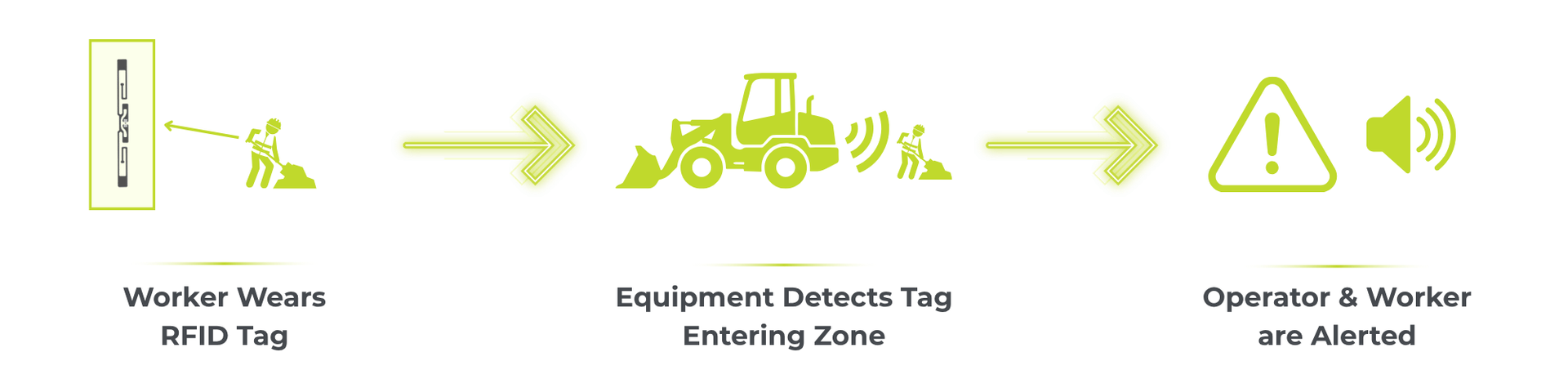
Here is the basic architecture of a passive RFID proximity detection system:
- Passive UHF RFID tags are integrated into SCAN~LINK safety apparel and marker tags. The tags have no batteries or internal power source.
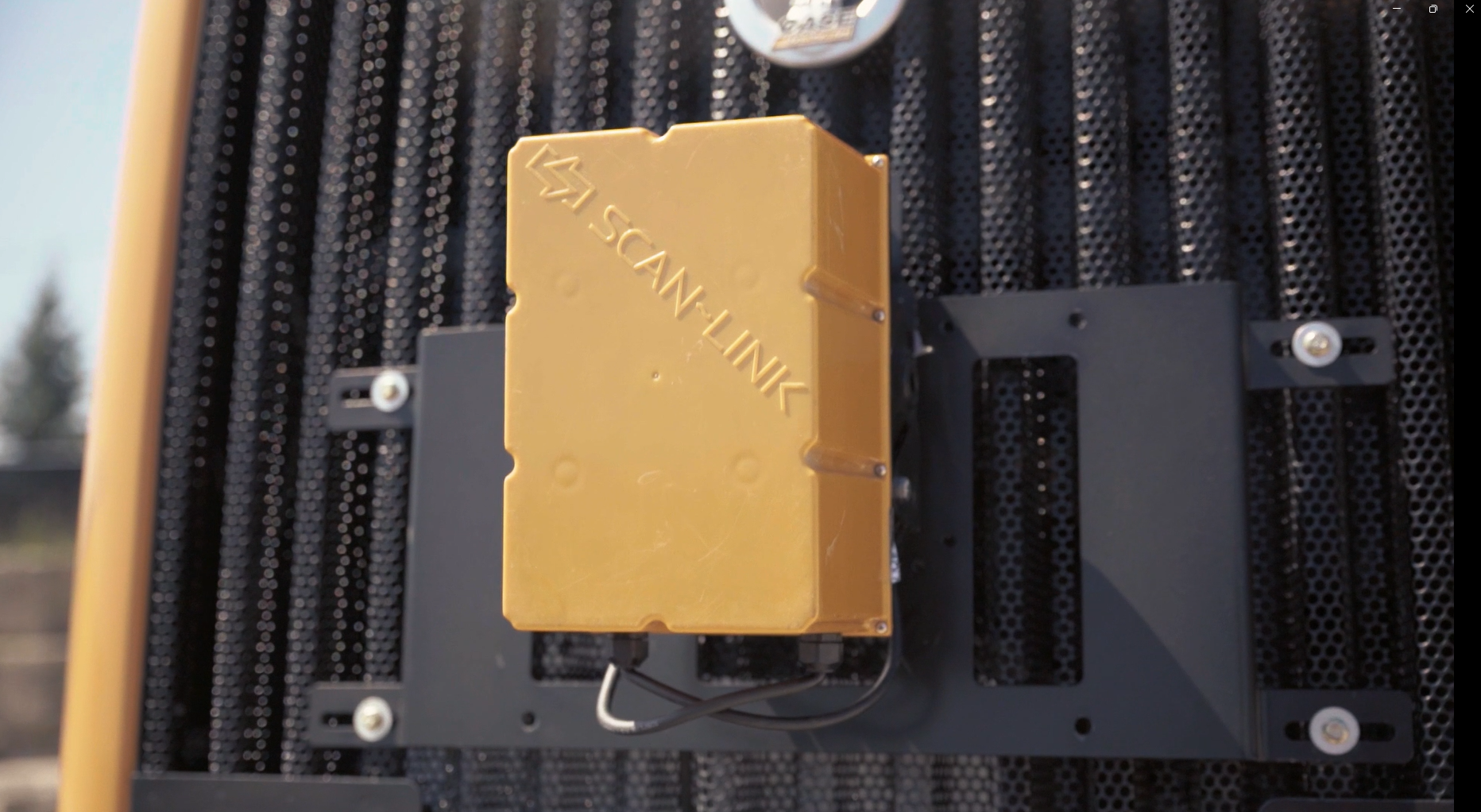
- An Antenna Unit mounted on mobile equipment sends and receives radio signals to identify tagged workers or assets within its configured detection zone.
- An In-Cab Display communicates with the Antenna Unit and provides the operator with visual and audible alerts when a tagged worker or asset is detected.
- An External Alarm simultaneously warns the ground worker that they are inside a hazard zone
Unlike active RFID tags, passive tags contain no battery or internal power source. Instead, the tag draws energy from the radio signal emitted by the reader antenna and uses that energy to respond with its unique identifier. Because the tag has no battery to charge or replace, passive RFID can provide a low-maintenance way to identify workers and assets in the field.
What Performance Factors Matter Most?
Environmental conditions, detection range, and maintenance requirements all play an important role when evaluating a proximity detection system for industrial applications. Understanding these factors can help safety and operations teams determine whether a system is suited to their equipment, work environment, and detection requirements.
Temperature Tolerance
Detection equipment used in industrial environments may be exposed to significant temperature fluctuations throughout the year. SCAN~LINK Antenna Units are designed to operate from -40°C to 85°C (-40°F to 185°F), supporting applications in cold-weather and high-temperature environments. This operating range allows SCAN~LINK systems to be deployed across a wide variety of outdoor and industrial environments.
Detection Range
Detection range determines the size of the area that can be monitored around a piece of equipment. The appropriate range depends on the equipment, operating environment, antenna configuration, and desired detection zone.
- People Detection: SCAN~LINK systems can be configured for adjustable detection ranges of up to 7.5 metres (25ft), depending on the system configuration and tagged apparel used.
- Marker Tags: SCAN~LINK
Marker Tags help protect fixed assets from collisions with heavy equipment. Marker Tags have ranges of up to 4 meters (13ft) for Standard Tags and up to
10 meters (32ft) for Long Range Tags.
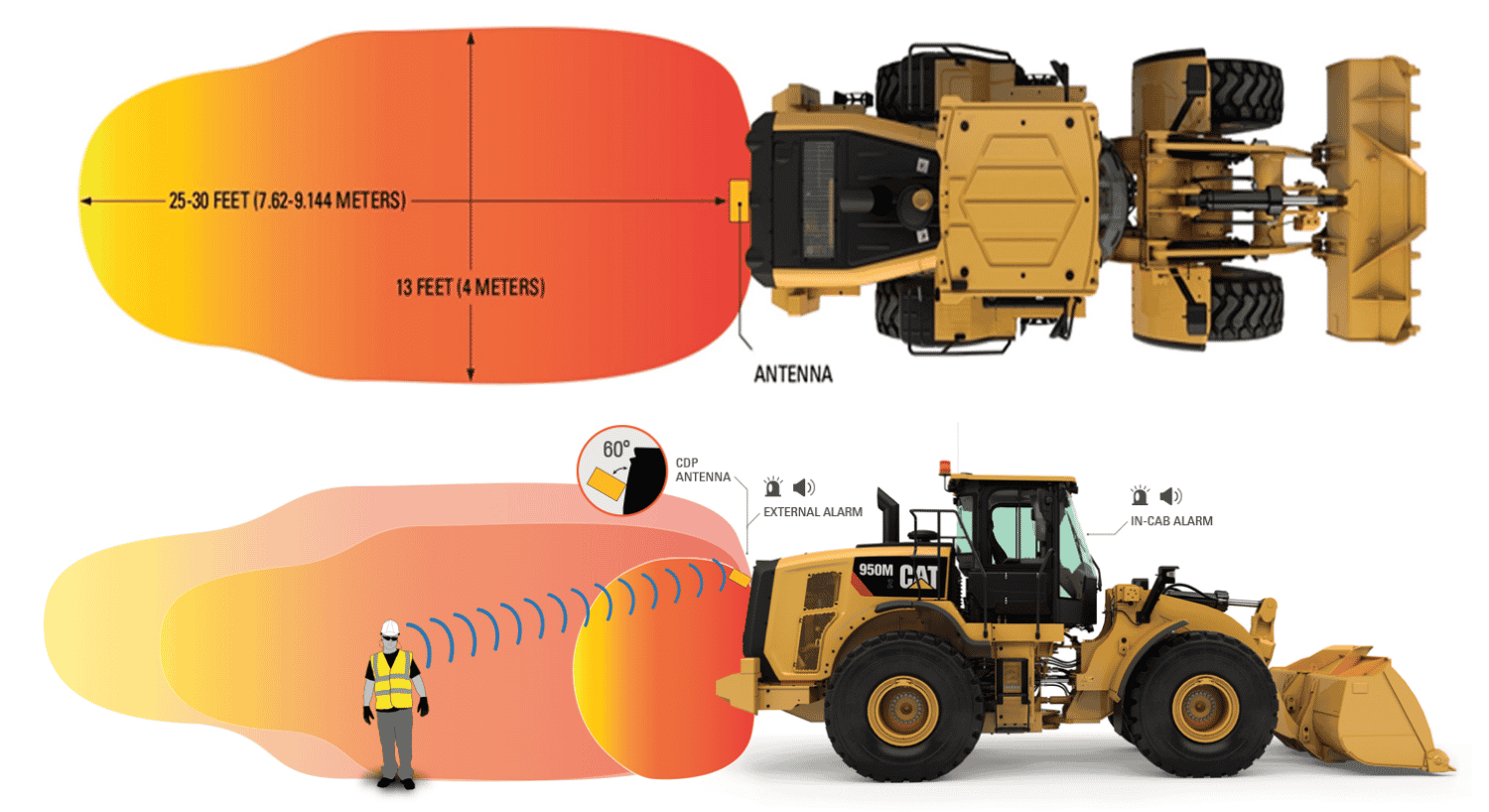
Adjustable detection range allows the system to be configured for different applications and equipment sizes. A confined work area may require a more focused detection zone, while larger equipment or open work areas may benefit from extended coverage.
Reliability & Low Maintenance
Passive RFID tags have no internal batteries, eliminating the need for charging or battery replacement on tagged workers and assets. SCAN~LINK passive RFID tags are designed for long-term use with minimal maintenance, while the system's machine-mounted components are built for demanding industrial environments. This low-maintenance design can simplify deployment and ongoing operation across jobsites and multi-site fleets.
SCAN~LINK passive RFID tags have an expected service life of more than 20 years, helping reduce the ongoing maintenance associated with battery-powered tags.
Passive vs. Active RFID: Understanding the Difference
Both passive and active RFID use radio-frequency technology to identify tagged people or assets, but they differ in how the tags are powered. That distinction can have a significant impact on maintenance, deployment, and day-to-day use in worker detection applications.
Active RFID
Active RFID tags contain an internal battery that powers the tag's communication. This allows active tags to transmit over longer ranges and support applications where an independent power source is beneficial. The tradeoff is that the battery becomes part of the tag's ongoing maintenance requirements, including eventual replacement or charging.
Passive RFID
Passive RFID tags do not contain an internal battery. Instead, they draw the energy needed to respond from the radio signal emitted by the reader antenna. For worker detection, this battery-free design can simplify deployment and reduce the maintenance required from workers and site personnel.
Key benefits include:
- No charging or battery replacement. Workers can use tagged apparel without managing a powered device.
- Low maintenance. Tags remain ready for use without routine battery servicing.
- Easy to scale. Battery-free tags can be deployed across large workforces without establishing a charging or battery-management program.
- Long service life. SCAN~LINK passive RFID tags have an expected service life of 20+ years, reducing the need for frequent tag replacement.
- Small and lightweight. Passive RFID tags have a minimal footprint, allowing them to be incorporated into safety apparel without adding virtually any weight or bulk.
For applications where workers need to be detected consistently throughout a workday, minimizing the number of tasks required to maintain the detection technology can be a significant advantage. With passive RFID, the tag is simply part of the worker's PPE rather than another electronic device they need to remember to charge, replace, or maintain.
Why Two-Way Alerting Matters
Proximity detection can provide valuable awareness to both the equipment operator and workers on the ground. When a tagged worker enters a configured detection zone, providing an alert to both parties gives each person an opportunity to recognize the situation and respond appropriately.
- The operator receives a visual and audible alert through the In-Cab Display Unit.
- The ground worker can receive an external audible alert indicating that they have entered a detection zone near equipped machinery.
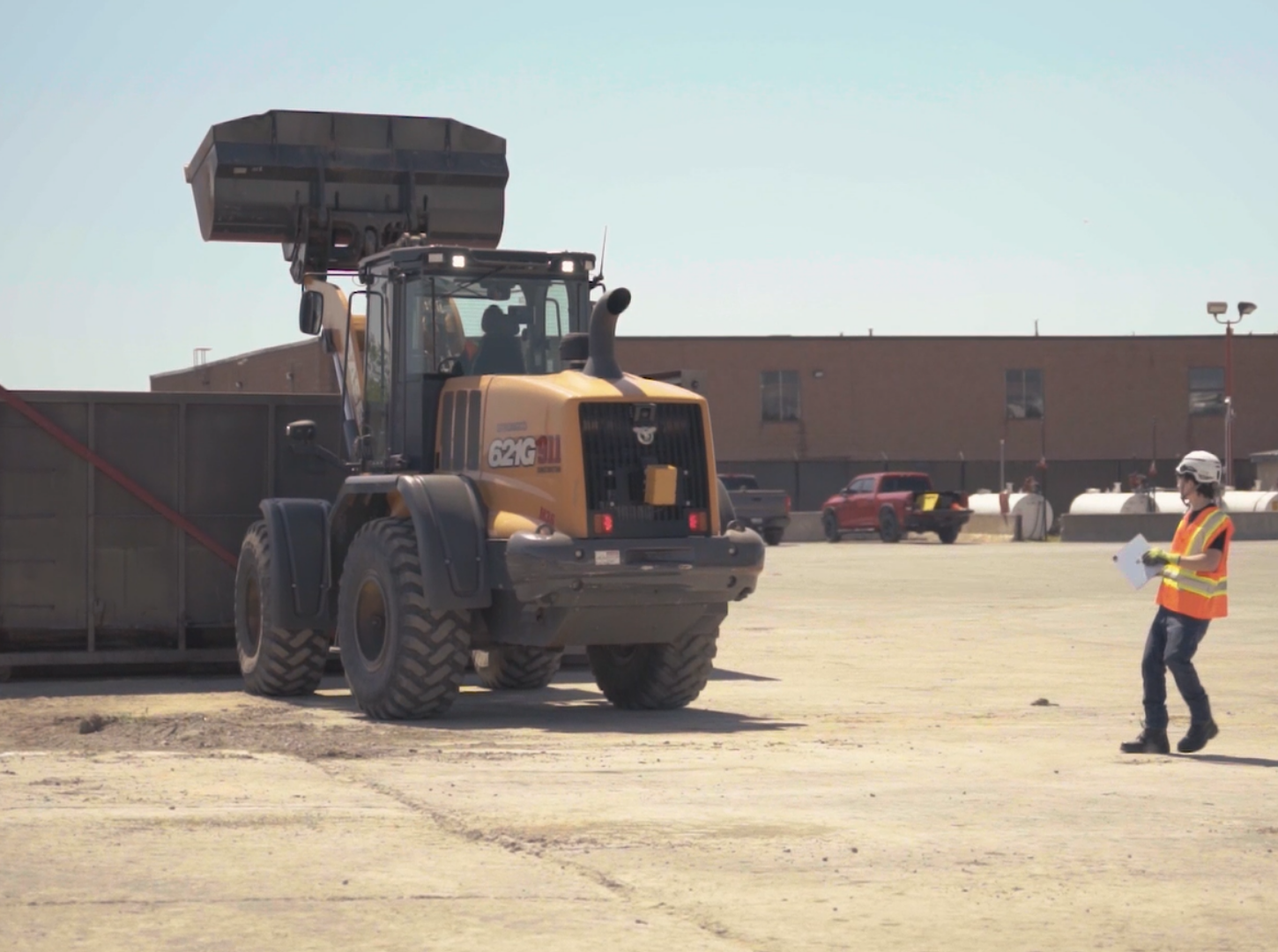
Providing alerts to both sides of the interaction is particularly useful in busy industrial environments where noise, activity, and other distractions can make individual warnings easier to miss. Two-way alerting adds another layer of awareness to existing site procedures and gives both the operator and worker information about the detection event.
Watch: See how SCAN~LINK's Armour System provides two-way alerts to both the operator and ground worker
What Should Safety Teams Evaluate Before Choosing a Safety System?
Choosing a proximity detection system involves more than comparing detection ranges or individual features. Safety and operations teams should consider how the technology will perform in their specific environment, how it will be deployed across their equipment, and what will be required to maintain it over time.
Use the following questions as starting points when evaluating a system:
- How does the system identify workers and assets?
- Understand what the system detects, how tagged workers or assets are identified, and how detection zones can be configured for your equipment.
- What is the specified operating temperature range?
- Confirm that the system's rated operating range covers the conditions your equipment and worksites experience throughout the year.
- What environmental conditions is it designed to withstand?
- Consider factors such as dust, moisture, rain, vibration, temperature, and other conditions common to your work environment.
- How much maintenance do the tags and system components require?
- Consider whether tags require batteries, charging, regular servicing, or other maintenance that could affect day-to-day use.
- How are operators and workers alerted to a detection?
- Understand what visual, audible, or other alerts are available and whether the system can provide awareness to both the operator and ground worker.
- What detection data is available?
- Determine whether detection events can be recorded and reviewed, and what information is available to help teams identify patterns and evaluate system performance.
- How easily can the system be configured across your fleet?
- Consider whether the technology can accommodate different equipment types, rental equipment, detection zones, antenna configurations, and operating environments as your needs change.
The Bottom Line
Passive RFID offers a practical approach to worker and asset detection in demanding industrial environments. Battery-free tags require no charging or battery replacement, while SCAN~LINK detection systems are designed to operate across a wide range of temperatures and environmental conditions. These characteristics make passive RFID well suited to applications where reliable detection and low-maintenance operation are important.
For safety and operations teams working around heavy equipment, detection technology can provide an additional layer of awareness for operators and workers on the ground. The right system should fit the equipment, environment, and detection requirements of the site while supporting existing safety procedures and controls.
Want to see how SCAN~LINK could fit your operation? Connect with our team to learn more about how our safety solutions improve safety and compliance, or request a detailed quote tailored to your jobsite.